
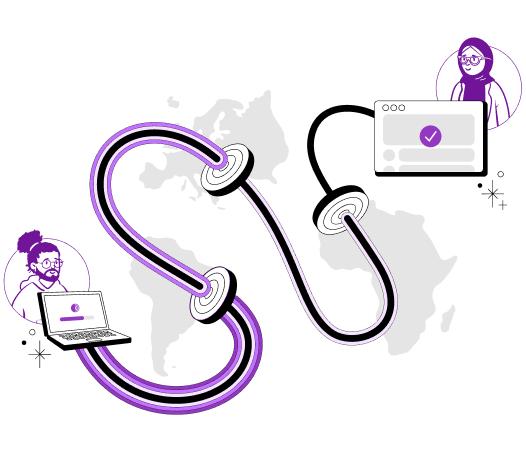
Onion routing is one of the most elegant solutions to online anonymity ever devised. If you’ve heard of Tor, you’ve encountered onion routing – but the concept is fascinating enough to deserve its own deep dive. Let’s peel back the layers (pun intended) and understand how this technology actually works.
The Core Problem Onion Routing Solves
When you browse the internet normally, your connection creates a direct path from your computer to the website you’re visiting. Every server along that path can see where the traffic is coming from and where it’s going. Your ISP sees everything. The website knows your IP address. Anyone monitoring network traffic can correlate this information.
Onion routing was designed to break these correlations. The goal: make it computationally impractical to link someone’s internet activity to their real-world identity.
The Encryption Layers Explained
Imagine you’re sending a message through three friends to reach someone, but you don’t want any single friend to know both who you are and who you’re trying to reach. Here’s what you’d do:
You write your message and seal it in an envelope addressed to the final recipient. Then you put that envelope inside another envelope addressed to friend #3. That goes inside an envelope for friend #2. And that goes inside an envelope for friend #1.
Friend #1 opens their envelope, sees instructions to pass it to friend #2, and does so (without knowing what’s inside). Friend #2 does the same, passing it to friend #3. Finally, friend #3 opens the last envelope and delivers your actual message.
This is exactly how onion routing works, except the “envelopes” are layers of encryption.
The Technical Implementation
When your Tor browser wants to connect to a website, it first selects a random path through three Tor relays. It then creates a nested encryption structure: the innermost layer is encrypted so only the exit node can read it, the middle layer so only the middle node can read it, and the outer layer so only the entry node can read it.
As the data packet travels through each node, one layer of encryption is removed. Each node only sees the address of the next node in the chain – like removing one layer from the onion. No single node knows both the source and destination.
Why This Design Is Brilliant
The genius of onion routing is in its distributed trust model. You don’t need to trust any single party – not even the Tor project itself. As long as not all three nodes in your circuit are compromised and working together, your anonymity is protected.
Even if someone controls one node in your circuit, they can only see part of the picture. An entry node knows your IP address but not what you’re accessing. An exit node sees what website you’re visiting but not your real IP. The middle node sees neither.
Circuit Creation and Management
Tor doesn’t use the same path for all your traffic. It creates new circuits (paths through the network) periodically – typically every ten minutes. This prevents long-term tracking and ensures that if one circuit is somehow compromised, only a limited amount of your activity is affected.
The path selection process is sophisticated. Tor tries to choose nodes in different countries and operated by different organizations. It avoids putting all your eggs in one basket, geographically or jurisdictionally.
The Onion Service Protocol
Onion routing isn’t just for clients accessing regular websites – it also powers “onion services” (websites that exist only on the Tor network, with addresses ending in .onion). These sites provide anonymity for both the visitor and the site operator.
When you access an onion service, both you and the website build circuits into the Tor network. You meet at a rendezvous point without either party revealing their location. It’s like two people meeting at a third location, each arriving via a maze that the other can’t trace back.
Performance Considerations
All this security comes with a cost: speed. Each additional hop adds latency. Each encryption layer requires processing. Onion routing will never be as fast as a direct connection, and that’s an intentional tradeoff. The question is whether the anonymity is worth the speed reduction – and for many use cases, it absolutely is.
Attacks and Defenses
Onion routing isn’t invincible. If an adversary controls both the entry and exit nodes in your circuit (a “timing attack”), they might correlate traffic patterns to link your identity to your activities. This is difficult but not impossible, especially for well-resourced adversaries.
The Tor network defends against this through sheer size – with thousands of relays, the odds of one adversary controlling multiple points in your circuit are low. It also uses guards (trusted entry nodes) that you stick with for a few months, reducing the risk of a malicious entry node.
The Broader Impact
Onion routing represents a fascinating intersection of cryptography, network design, and privacy engineering. It’s used by millions of people daily – journalists, activists, privacy-conscious individuals, and researchers. The technology that powers Tor has influenced other privacy systems and demonstrated that strong anonymity can be practical, not just theoretical.
For students studying computer science, cryptography, or network security, onion routing offers a masterclass in privacy-preserving system design. It shows how multiple simple principles (encryption, random routing, distributed trust) can combine to create something remarkably powerful.