
Digital Privacy as a Human Right

Is privacy a privilege or a fundamental right? In our increasingly digital world, this question has moved from philosophical debate to urgent practical concern. Let’s explore why digital privacy matters and how it connects to broader human rights principles.

Privacy in International Law

The Universal Declaration of Human Rights, adopted by the United Nations in 1948, includes privacy as a fundamental right. Article 12 states: “No one shall be subjected to arbitrary interference with his privacy, family, home or correspondence.” This was written long before the internet, but its principles remain relevant.

The International Covenant on Civil and Political Rights (1966) reinforced this, declaring that everyone has the right to protection against arbitrary or unlawful interference with their privacy. Many countries have incorporated these principles into their constitutions and laws.

Why Privacy Matters

Privacy isn’t about having “something to hide.” It’s about having control over your personal information and how it’s used. Think about it this way: you probably close the bathroom door even though you’re not doing anything illegal. Privacy is about boundaries, dignity, and autonomy.

In the digital realm, privacy protects several important interests. It allows us to explore ideas without judgment, develop our identities without constant surveillance, and communicate freely without fear of retribution. It creates space for dissent, creativity, and personal growth.

The Digital Age Challenge

Digital technology has created unprecedented challenges for privacy. Our phones track our locations. Our searches reveal our interests, concerns, and questions. Our purchases, medical records, and communications all generate data trails that can be collected, analyzed, and used in ways we never intended.

This isn’t hypothetical. Companies build detailed profiles of our preferences and behaviors. Governments collect metadata on communications at massive scales. Data brokers compile and sell personal information. All of this happens largely invisibly, without meaningful consent or control.

The Chilling Effect

When people know they’re being watched, they change their behavior. Researchers call this the “chilling effect.” Studies show that people search for less controversial topics, share fewer opinions, and engage in more self-censorship when they know they’re being monitored.

This has profound implications for free speech and democracy. If people can’t research sensitive topics, communicate privately with journalists, or organize politically without surveillance, we lose something essential to a free society. Privacy and freedom of expression are deeply interconnected.

Privacy and Other Rights

Privacy supports many other fundamental rights. Freedom of association depends on being able to join groups without government surveillance. Freedom of thought requires space to develop ideas without external judgment. Political participation needs confidential communication between activists and organizers.

For vulnerable populations, privacy can be literally lifesaving. Domestic abuse survivors need privacy to seek help without their abusers discovering their plans. LGBTQ+ individuals in hostile environments need privacy to explore their identities safely. Whistleblowers need privacy to expose wrongdoing without facing retaliation.

The Surveillance Capitalism Model

Much of the internet operates on what Harvard professor Shoshana Zuboff calls “surveillance capitalism” – business models based on collecting maximum data about users to predict and influence their behavior. This creates structural incentives to undermine privacy.

When privacy becomes a luxury good – something you can only have if you pay for premium services or have technical expertise to protect yourself – it ceases to function as a right. Rights shouldn’t depend on wealth or technical knowledge.

Legal Protections Worldwide

Different regions have taken different approaches to protecting digital privacy. The European Union’s General Data Protection Regulation (GDPR) gives individuals significant control over their personal data. California’s Consumer Privacy Act provides similar protections at the state level.

However, many countries lack comprehensive digital privacy laws. Others have laws on the books but weak enforcement. And even strong privacy laws struggle to keep pace with rapidly evolving technology.

Technical Tools as Rights Protection

This is where privacy-enhancing technologies become important. Tools like encryption, Tor, and anonymous communication systems aren’t just about technology – they’re about enabling the exercise of fundamental rights in digital spaces.

When legal protections are insufficient or governments themselves pose privacy threats, technical tools become crucial. They create spaces where privacy exists regardless of the legal or political environment.

Balancing Privacy and Other Interests

Privacy isn’t absolute. It must be balanced against other legitimate interests like public safety, national security, and law enforcement. The question is how to strike that balance appropriately.

Many privacy advocates argue that current systems have swung too far toward surveillance. They point out that mass collection of data on everyone is different from targeted surveillance of individuals suspected of wrongdoing. The former treats everyone as potential suspects; the latter respects the presumption of innocence.

What Students and Researchers Should Know

Understanding privacy as a human right helps frame technical discussions in their broader context. When we talk about encryption protocols, anonymous networks, or data protection regulations, we’re really talking about how to preserve fundamental freedoms in the digital age.

This perspective is valuable for computer science students building the next generation of systems, policy students considering regulatory approaches, and anyone interested in digital rights. Technology choices have human rights implications, and human rights principles should inform technology design.

The Path Forward

Protecting digital privacy requires action on multiple fronts: better laws and regulations, privacy-respecting technology design, education about privacy risks and tools, and cultural recognition of privacy’s importance.

As individuals, we can make privacy-conscious choices about which services we use and how we share our information. As citizens, we can advocate for stronger privacy protections. As students and researchers, we can develop better technical solutions and study privacy’s social impacts.

Digital privacy isn’t just a technical problem or a legal question – it’s a fundamental human right that shapes the kind of society we live in. Recognizing this helps us approach privacy challenges with the seriousness they deserve.

The History of Anonymous Communication Networks

Long before Tor and modern privacy tools, people were grappling with the same fundamental question: how can we communicate privately in a world where messages can be intercepted? The history of anonymous communication networks is a fascinating journey through cryptography, networking, and the ongoing tension between privacy and surveillance.

The Pre-Internet Era: Remailers and PGP

In the early 1990s, as the internet was becoming publicly accessible, privacy advocates started worrying about electronic surveillance. One of the first solutions was anonymous remailers – servers that would strip identifying information from emails and forward them anonymously.

The Cypherpunk movement, a group of privacy activists and cryptographers, championed these tools. They believed strong cryptography should be available to everyone, not just governments and corporations. Pretty Good Privacy (PGP), released by Phil Zimmermann in 1991, became the standard for email encryption.

But email encryption only protected message content. The metadata – who was communicating with whom – remained visible. This sparked interest in more sophisticated anonymity systems.

The Birth of Onion Routing

In the mid-1990s, researchers at the U.S. Naval Research Laboratory started developing onion routing. The goal was protecting U.S. intelligence communications, but they quickly realized a crucial point: a network used only by spies would be obvious to identify. For anonymity networks to work, they needed diverse users.

This led to an interesting principle: the best anonymity systems benefit from having many users with different motivations. A network that includes journalists, activists, businesses, and everyday privacy-conscious users provides better cover than one used only for sensitive government communications.

The Tor Project Begins

In 2002, the alpha version of Tor (The Onion Router) was released. It was open-sourced in 2004, and the nonprofit Tor Project was founded in 2006. This marked a turning point: military-grade anonymity technology was now freely available to anyone.

Early Tor was small – just a few dozen nodes. But it grew rapidly as privacy advocates, academics, and civil liberties organizations recognized its potential. By 2010, Tor had thousands of relays worldwide and hundreds of thousands of users.

Other Approaches to Anonymity

Tor wasn’t the only game in town. I2P (Invisible Internet Project), launched in 2003, took a different approach. Instead of being optimized for accessing the regular internet anonymously, I2P focused on creating an anonymous network within the internet – a “darknet” where both clients and servers could hide their locations.

Freenet, started in 2000, took yet another approach. It’s a distributed data store where files are stored anonymously across many computers, making it nearly impossible to remove information or identify who posted what.

Each system made different tradeoffs between speed, anonymity, and usability. Tor prioritized usability and integration with the existing internet. I2P focused on internal network communications. Freenet emphasized censorship resistance.

The Darknet Markets Era

In 2011, Silk Road launched, using Tor to create an anonymous marketplace. While controversial, it dramatically increased public awareness of Tor and anonymous networks. The subsequent law enforcement investigation and shutdown taught important lessons about both the strengths and limitations of anonymity tools.

This period (2011-2017) saw numerous markets emerge and fall, each incident teaching researchers more about traffic analysis, operational security failures, and the cat-and-mouse game between anonymity and deanonymization.

Technical Evolution and Improvements

Tor has continuously evolved. Version 3 onion services, launched in 2017, increased address lengths from 16 to 56 characters and improved security. The Tor Browser has become increasingly sophisticated at preventing fingerprinting and protecting users from common mistakes.

Research into traffic analysis attacks has led to improvements in how Tor builds circuits and handles timing. The network has grown to thousands of relays and millions of daily users, providing better anonymity through larger anonymity sets.

The Modern Landscape

Today, anonymous communication networks serve a diverse user base. Journalists use them to protect sources. Activists in authoritarian countries use them to organize safely. Privacy-conscious individuals use them to avoid surveillance capitalism. Researchers use them to study online behavior without revealing their locations.

The technology has matured. Modern Tor is significantly faster and more reliable than early versions. It’s easier to use, with the Tor Browser providing strong privacy protection right out of the box.

Ongoing Challenges

Anonymity networks face continued challenges. Nation-states attempt to block access to Tor through Deep Packet Inspection. Researchers continuously probe for timing attacks and traffic correlation vulnerabilities. Funding remains a challenge – how do you sustainably fund infrastructure that people use precisely because they don’t want to be identified?

At the same time, academic research continues improving anonymity technologies. Proposals for next-generation anonymous networks incorporate lessons from decades of real-world use and attacks.

The Broader Context

The history of anonymous communication networks mirrors broader societal debates about privacy, surveillance, and freedom. As governments and corporations develop increasingly sophisticated tracking capabilities, tools for anonymous communication become more important.

These networks represent a technical answer to a fundamentally political question: can individuals have private conversations in the digital age? The engineering solutions – onion routing, mixnets, blind signatures – show how cryptography and network design can create spaces for private communication even in a world of pervasive monitoring.

For students of computer science, cryptography, or digital rights, this history offers crucial lessons. It shows how technical systems intersect with policy, law enforcement, activism, and individual rights. It demonstrates that privacy technology isn’t static – it’s an ongoing conversation between researchers, users, and those who would undermine anonymity.


Understanding Onion Routing Technology

Onion routing is one of the most elegant solutions to online anonymity ever devised. If you’ve heard of Tor, you’ve encountered onion routing – but the concept is fascinating enough to deserve its own deep dive. Let’s peel back the layers (pun intended) and understand how this technology actually works.

The Core Problem Onion Routing Solves

When you browse the internet normally, your connection creates a direct path from your computer to the website you’re visiting. Every server along that path can see where the traffic is coming from and where it’s going. Your ISP sees everything. The website knows your IP address. Anyone monitoring network traffic can correlate this information.

Onion routing was designed to break these correlations. The goal: make it computationally impractical to link someone’s internet activity to their real-world identity.

The Encryption Layers Explained

Imagine you’re sending a message through three friends to reach someone, but you don’t want any single friend to know both who you are and who you’re trying to reach. Here’s what you’d do:

You write your message and seal it in an envelope addressed to the final recipient. Then you put that envelope inside another envelope addressed to friend #3. That goes inside an envelope for friend #2. And that goes inside an envelope for friend #1.

Friend #1 opens their envelope, sees instructions to pass it to friend #2, and does so (without knowing what’s inside). Friend #2 does the same, passing it to friend #3. Finally, friend #3 opens the last envelope and delivers your actual message.

This is exactly how onion routing works, except the “envelopes” are layers of encryption.

The Technical Implementation

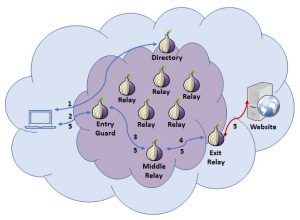
When your Tor browser wants to connect to a website, it first selects a random path through three Tor relays. It then creates a nested encryption structure: the innermost layer is encrypted so only the exit node can read it, the middle layer so only the middle node can read it, and the outer layer so only the entry node can read it.

As the data packet travels through each node, one layer of encryption is removed. Each node only sees the address of the next node in the chain – like removing one layer from the onion. No single node knows both the source and destination.

Why This Design Is Brilliant

The genius of onion routing is in its distributed trust model. You don’t need to trust any single party – not even the Tor project itself. As long as not all three nodes in your circuit are compromised and working together, your anonymity is protected.

Even if someone controls one node in your circuit, they can only see part of the picture. An entry node knows your IP address but not what you’re accessing. An exit node sees what website you’re visiting but not your real IP. The middle node sees neither.

Circuit Creation and Management

Tor doesn’t use the same path for all your traffic. It creates new circuits (paths through the network) periodically – typically every ten minutes. This prevents long-term tracking and ensures that if one circuit is somehow compromised, only a limited amount of your activity is affected.

The path selection process is sophisticated. Tor tries to choose nodes in different countries and operated by different organizations. It avoids putting all your eggs in one basket, geographically or jurisdictionally.

The Onion Service Protocol

Onion routing isn’t just for clients accessing regular websites – it also powers “onion services” (websites that exist only on the Tor network, with addresses ending in .onion). These sites provide anonymity for both the visitor and the site operator.

When you access an onion service, both you and the website build circuits into the Tor network. You meet at a rendezvous point without either party revealing their location. It’s like two people meeting at a third location, each arriving via a maze that the other can’t trace back.

Performance Considerations

All this security comes with a cost: speed. Each additional hop adds latency. Each encryption layer requires processing. Onion routing will never be as fast as a direct connection, and that’s an intentional tradeoff. The question is whether the anonymity is worth the speed reduction – and for many use cases, it absolutely is.

Attacks and Defenses

Onion routing isn’t invincible. If an adversary controls both the entry and exit nodes in your circuit (a “timing attack”), they might correlate traffic patterns to link your identity to your activities. This is difficult but not impossible, especially for well-resourced adversaries.

The Tor network defends against this through sheer size – with thousands of relays, the odds of one adversary controlling multiple points in your circuit are low. It also uses guards (trusted entry nodes) that you stick with for a few months, reducing the risk of a malicious entry node.

The Broader Impact

Onion routing represents a fascinating intersection of cryptography, network design, and privacy engineering. It’s used by millions of people daily – journalists, activists, privacy-conscious individuals, and researchers. The technology that powers Tor has influenced other privacy systems and demonstrated that strong anonymity can be practical, not just theoretical.

For students studying computer science, cryptography, or network security, onion routing offers a masterclass in privacy-preserving system design. It shows how multiple simple principles (encryption, random routing, distributed trust) can combine to create something remarkably powerful.

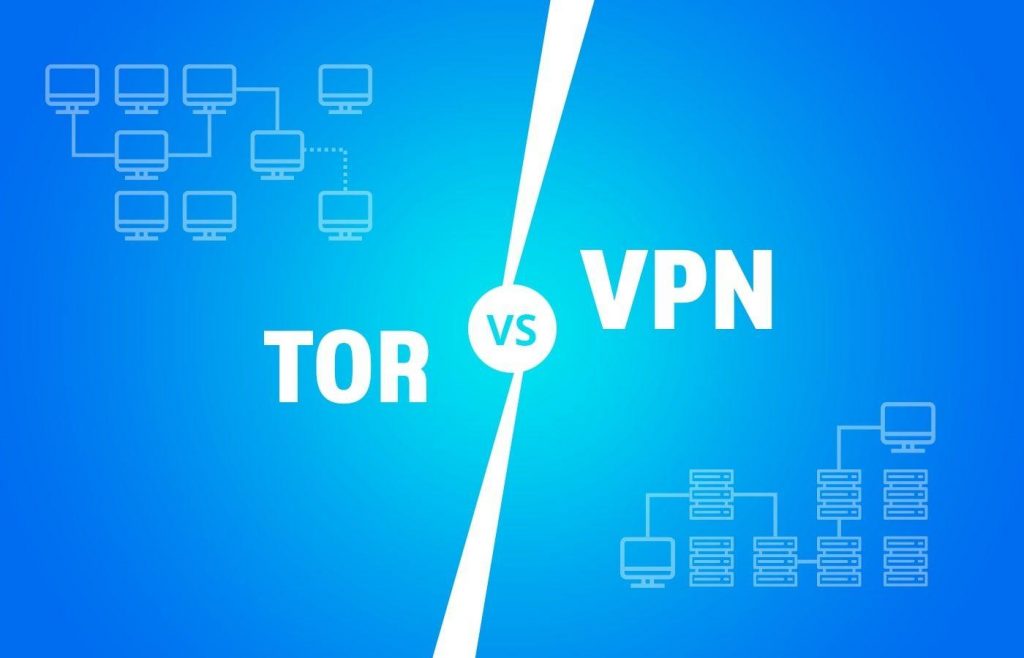
VPN vs Tor: Understanding the Differences

VPN vs Tor: Understanding the Differences

When people start exploring online privacy, two technologies always come up: VPNs and Tor. Both help protect your privacy, but they work in fundamentally different ways and serve different purposes. Let’s break down what each does and when you might want to use one over the other.

What Is a VPN?

A Virtual Private Network (VPN) creates an encrypted tunnel between your computer and a server operated by the VPN company. All your internet traffic flows through this tunnel to the VPN server, which then forwards it to wherever you’re trying to go online.

To websites you visit, it looks like your traffic is coming from the VPN server, not your real location. Your internet service provider (ISP) can see you’re connected to a VPN, but they can’t see what websites you’re visiting or what you’re doing online.

How Tor Is Different

Tor, on the other hand, routes your traffic through three or more randomly selected volunteer-operated servers before it reaches its destination. Each server only knows about the server immediately before and after it in the chain. This creates multiple layers of encryption – hence the “onion” metaphor.

Unlike VPNs, no single server (or organization) knows both where your traffic is coming from and where it’s going. This distributed trust model is Tor’s fundamental strength.

Key Differences That Matter

Trust Model: With a VPN, you’re trusting a single company with your data. That company can see both your real IP address and everything you do online. With Tor, no single point in the network has complete information about your activity.

Speed: VPNs are generally much faster because your traffic only makes one extra hop (to the VPN server). Tor routes through multiple servers and adds encryption layers, making it noticeably slower.

Cost: Quality VPN services typically require a monthly or annual subscription. Tor is completely free and always will be – it’s run by volunteers and nonprofit organizations.

Anonymity Level: Tor provides stronger anonymity because of its distributed trust model. VPN providers could theoretically log your activity (though reputable ones claim not to). Tor’s design makes logging much more difficult.

When to Use a VPN

Streaming content: VPNs are fast enough for video streaming
Protecting data on public WiFi: Encrypts your traffic from snooping on untrusted networks
Bypassing geographic restrictions: Access content available in specific countries
Hiding activity from your ISP: Prevent your internet provider from seeing or selling your browsing data
Business use: Securely accessing company resources remotely

When to Use Tor

Maximum anonymity: When you need strong protection of your identity
Accessing .onion services: Websites only available through Tor network
Censorship circumvention: Accessing blocked content in restricted countries (though this can be risky)
Research: Browsing without your location influencing search results or content
Whistleblowing or journalism: When source protection is critical

Can You Use Both Together?

Yes, and there are two main approaches. “Tor over VPN” means connecting to a VPN first, then using Tor. This hides your Tor usage from your ISP but doesn’t improve Tor’s anonymity. “VPN over Tor” is more complex and less common, providing the VPN provider with less information about you.

For most people, using either one alone is sufficient depending on your needs.

Common Misconceptions

A VPN doesn’t make you anonymous – it shifts trust from your ISP to the VPN provider. Tor doesn’t make everything you do untraceable – you can still de-anonymize yourself by logging into personal accounts or revealing identifying information.

Neither tool is illegal to use in most countries. They’re privacy tools, like curtains on your windows. They provide privacy, which isn’t inherently suspicious or wrong.

Making the Right Choice

For everyday privacy needs – protecting your data on coffee shop WiFi, preventing ISP snooping, accessing geo-restricted content – a reputable VPN is usually the right choice. It’s fast, easy to use, and provides solid privacy for most purposes.

For situations requiring strong anonymity – journalism, research, activism, whistleblowing – Tor’s distributed trust model provides stronger protection. The speed tradeoff is worth it when anonymity is critical.

Understanding these differences helps you choose the right tool for your needs. Both VPNs and Tor have valuable roles in protecting online privacy, and knowing when to use each makes you a more informed digital citizen.

Tails OS Explained: The Amnesic Operating System

Tails OS Explained: The Amnesic Operating System

Imagine an operating system that forgets everything you do the moment you turn it off. That’s Tails – and for people who need serious privacy protection, it’s an incredibly valuable tool. Let’s explore what makes this operating system unique and why privacy advocates love it.

What Makes Tails Special?

Tails stands for “The Amnesic Incognito Live System.” That name tells you almost everything you need to know. It’s an operating system you run from a USB stick or DVD, and it routes all your internet traffic through Tor by default. But here’s the really clever part: it leaves no trace on the computer you’re using.

When you shut down Tails, it’s like your computing session never happened. No files saved to the hard drive, no browser history, no cookies, no records of what you did. Everything disappears. This “amnesia” is a feature, not a bug.

How Does Tails Work?

Tails is based on Debian Linux, but you don’t need to know anything about Linux to use it. You install Tails on a USB stick (8GB or larger), then boot your computer from that stick instead of your normal operating system. While Tails is running, your computer’s hard drive isn’t even accessed – everything runs from RAM.

All internet connections automatically go through Tor, so your IP address is hidden. The system includes pre-installed encrypted communication tools, and you can’t accidentally leak your real identity through a misconfigured application.

Who Uses Tails and Why?

Tails users span a wide spectrum of legitimate needs:

Journalists: Meeting with confidential sources without leaving digital traces
Activists: Organizing in countries with government surveillance
Domestic abuse survivors: Safely researching resources and support without partners monitoring their activity
Lawyers: Protecting privileged client communications
Researchers: Studying sensitive topics without creating permanent records
Security professionals: Demonstrating privacy tools and techniques

Key Features of Tails

Persistent Storage (Optional): While Tails normally forgets everything, you can create an encrypted persistent storage area on your USB stick for files you actually want to keep.

Integrated Privacy Tools: Tails comes with Tor Browser, encrypted email tools, secure messaging applications, and office software – all configured for privacy.

Encryption by Default: Files you save to persistent storage are automatically encrypted. You set up a passphrase when creating the persistent volume.

No Installation Required: You can use Tails on any computer without installing anything permanently or changing the computer’s existing setup.

The Technical Side (Simplified)

Tails uses several clever techniques to protect privacy. It blocks all non-Tor network connections, preventing applications from accidentally bypassing anonymity. It includes Metadata Anonymization Toolkit to strip identifying information from documents and photos. And it uses secure deletion methods when you explicitly choose to delete files from persistent storage.

Limitations and Considerations

Tails is excellent for privacy, but it’s not magic. If your computer has been compromised with hardware keyloggers or BIOS-level malware, Tails can’t protect you. Similarly, if you use Tails to log into personal accounts that are tied to your real identity, you’re de-anonymizing yourself.

The system is also slower than running an OS from your hard drive since everything runs from a USB stick and RAM. And while the amnesia feature is great for privacy, it means you need to be careful not to lose work you actually wanted to save.

Getting Started with Tails

Installing Tails is straightforward but requires following instructions carefully. You download the official Tails image, verify its authenticity (important for security), and then copy it to a USB stick using provided tools. The Tails website offers excellent step-by-step documentation for all major operating systems.

Real-World Impact

Tails has been credited with protecting journalists working on major investigative stories and activists organizing in dangerous circumstances. Edward Snowden famously used Tails when communicating with journalists about NSA surveillance. It represents a rare intersection of military-grade privacy technology made accessible to everyday users.

For students studying privacy technology, researchers exploring anonymity tools, or anyone interested in how privacy engineering works in practice, Tails offers a fascinating case study. It shows how multiple privacy technologies (live USB systems, Tor, encryption, secure deletion) can be combined into a cohesive, user-friendly tool that provides genuinely strong protection.

Understanding Tor: The Technology Behind Anonymous Browsing

If you’ve ever wondered how people browse the internet anonymously, you’ve probably heard of Tor. But what exactly is it, and how does it work? Let’s break down this fascinating technology in plain English.

What Is Tor?

Tor stands for “The Onion Router” – and yes, that name is intentional! Just like an onion has multiple layers, Tor wraps your internet traffic in multiple layers of encryption. Originally developed by the U.S. Naval Research Laboratory in the 1990s, Tor has evolved into one of the most important privacy tools available today.
At its core, Tor is free, open-source software that helps you browse the internet anonymously. It routes your connection through a network of volunteer-operated servers around the world, making it extremely difficult for anyone to trace your online activity back to you.

How Does Tor Actually Work?

Here’s the simple version: when you use Tor, your internet traffic bounces through at least three random servers (called “nodes” or “relays”) before reaching its destination. Each server only knows about the server immediately before and after it – no single server knows both where your traffic came from and where it’s going.
Think of it like sending a letter through multiple post offices, where each office only sees the address of the next office, not your final destination. This creates a chain of encrypted connections that protects your privacy.

The Three Types of Tor Nodes

Entry Nodes (Guard Nodes): These are the first servers your traffic reaches. They know your real IP address but don’t know what websites you’re visiting.
Middle Nodes: These relay your traffic but don’t know your IP address or your destination. They just pass encrypted data along.
Exit Nodes: These are the final servers before your traffic reaches its destination. They can see what website you’re visiting but don’t know your real IP address.

Why Do People Use Tor?

There are many legitimate reasons people choose to use Tor:

Journalists and activists: Protecting sources and communicating safely in oppressive regimes
Privacy-conscious individuals: Preventing tracking by advertisers and data brokers
Researchers: Accessing information without bias from location-based filtering
Whistleblowers: Securely sharing information about wrongdoing
Everyday users: Simply valuing their right to privacy online

Common Misconceptions About Tor

Let’s clear up some myths. First, using Tor is completely legal in most countries. It’s a privacy tool, just like a VPN or encrypted messaging app. Second, while Tor does provide strong anonymity, it’s not a magic bullet – you still need to follow good security practices. And third, the network isn’t inherently slow; while it’s generally slower than a direct connection due to the routing process, it’s perfectly usable for most activities.

Limitations and Things to Keep in Mind

Tor is powerful, but it’s not perfect. Because your traffic exits through volunteer-run servers, the exit node can theoretically see unencrypted traffic (though not where it came from). That’s why you should still use HTTPS websites when possible. Additionally, Tor doesn’t anonymize everything automatically – you need to be mindful of logging into personal accounts or revealing identifying information.

Getting Started with Tor

The easiest way to use Tor is through the Tor Browser, which is based on Firefox but configured for maximum privacy. It’s available for Windows, Mac, Linux, and Android. The browser handles all the complicated routing for you – just download, install, and browse.
Understanding how Tor works helps you appreciate both its strengths and limitations. It’s a remarkable tool for online privacy, developed and maintained by a community dedicated to protecting internet freedom. Whether you’re a journalist, researcher, or just someone who values privacy, Tor provides a valuable layer of anonymity in an increasingly surveilled digital world.

Anonymity Frameworks Compared: Tor vs. I2P vs. Freenet

Multiple anonymity network frameworks exist, each with distinct design philosophies, technical implementations, use cases, and trade-offs. Tor, I2P, and Freenet represent the three major approaches to anonymous communication, offering different balances between speed, security, and functionality. Understanding these differences enables informed decisions about which framework suits specific needs while recognizing that no single solution optimally serves all anonymity requirements.

This article provides technical comparison of these three frameworks, examining architecture, security properties, performance characteristics, use cases, and ongoing development. We focus on technical education rather than facilitating illegal activity, recognizing that anonymity tools serve both legitimate and illegitimate purposes depending on user intent.

Core Design Philosophies

Tor prioritizes low-latency browsing and clearnet access, designed to feel as close to normal web browsing as possible while providing strong anonymity. This usability focus drives widespread adoption but creates some security trade-offs.

I2P emphasizes internal network applications with peer-to-peer focus, creating a separate anonymous network for applications that operate entirely within the I2P ecosystem. This design provides stronger anonymity for internal services but makes clearnet access secondary or impossible.

Freenet focuses on censorship-resistant publishing and long-term data preservation. Rather than facilitating real-time communication, Freenet creates distributed storage where content persists even when original publishers disappear and cannot be removed by any authority.

These philosophical differences drive architectural choices—Tor optimizes for speed and clearnet compatibility, I2P optimizes for internal security and peer-to-peer applications, and Freenet optimizes for censorship resistance and data persistence. Each succeeds at its primary goal while accepting limitations in other areas.

Tor: The Onion Router

Tor’s architecture uses entry (guard), middle, and exit nodes creating three-hop circuits between clients and destinations. Circuit construction selects random relays from a directory authority consensus, and layered encryption protects data with multiple encryption layers peeled off at each hop.

Hidden services and rendezvous points enable fully anonymous communication where neither client nor server knows the other’s location. The introduction point mechanism allows hidden services to receive connections without revealing their network position.

Strengths include large relay network with thousands of volunteers providing capacity, usability approaching normal browsing through Tor Browser, and clearnet bridging allowing access to regular websites anonymously. This makes Tor accessible to non-technical users and suitable for everyday anonymous browsing.

Weaknesses include centralized directory authorities creating potential control points, exit node vulnerabilities where unencrypted traffic becomes visible, and traffic analysis susceptibility when adversaries control multiple points in the network. Nation-state adversaries with comprehensive network monitoring can sometimes deanonymize Tor users through correlation attacks.

Best use cases include web browsing anonymously, accessing clearnet sites without revealing identity, investigative journalism and source protection, censorship circumvention in restricted countries, and general-purpose anonymity for users who need usable systems.

I2P: The Invisible Internet Project

I2P architecture implements garlic routing—similar to onion routing but with messages bundled together—and unidirectional tunnels where inbound and outbound traffic use completely separate paths. This prevents many traffic analysis attacks that exploit bidirectional correlation.

No exit nodes in I2P mean all traffic remains within the network. Rather than accessing clearnet sites, I2P supports internal services called “eepsites” and peer-to-peer applications. This eliminates exit node vulnerabilities but prevents casual web browsing.

Distributed network database (NetDB) replaces Tor’s directory authorities with distributed hash table storing router information. This decentralization removes single points of failure but creates complexity in maintaining network consensus.

Peer-to-peer applications including anonymous email, file sharing, and chat work well in I2P’s design. The network specifically supports applications that benefit from fully bidirectional anonymous communication.

Strengths include end-to-end anonymity with no clearnet exposure, distributed architecture with no central control points, and strong protection against traffic analysis through unidirectional tunnels. I2P provides security properties difficult to achieve in Tor’s architecture.

Weaknesses include smaller network limiting relay capacity and resilience, steeper learning curve for users and application developers, and no native clearnet access. I2P requires dedicated applications rather than working with standard web browsers.

Best use cases include peer-to-peer file sharing anonymously, anonymous email and messaging within the network, applications requiring bidirectional anonymous communication, and scenarios where stronger anonymity justifies reduced usability compared to Tor.

Freenet: Distributed Data Store

Freenet implements distributed hash table (DHT) storage where content is split, encrypted, and stored across many nodes. No single node stores complete files, and storage is redundant such that content survives individual node failures.

Darknet versus Opennet modes affect trust assumptions. Darknet mode connects only to manually configured trusted peers providing strong security, while opennet mode automatically connects to strangers providing easier setup but weaker security.

Content replication and availability improve as content is requested—popular content becomes widely distributed and fast to retrieve while unpopular content may be slow or eventually disappear. This creates natural load balancing.

Censorship resistance through distributed storage means no authority can remove content since no one knows which nodes store which pieces. Attempts to censor content spread it further as requests trigger additional replication.

Strengths include long-term data persistence with content surviving original publisher’s departure, impossibility of content removal by any authority, and distributed architecture with no central points of control or failure.

Weaknesses include slow retrieval speeds especially for unpopular content, limited real-time interaction capabilities since it’s optimized for storage not communication, and complexity in understanding how to use effectively.

Best use cases include whistleblowing with guaranteed persistence, archiving sensitive documents that must survive censorship attempts, publishing controversial content that faces takedown threats, and preserving historical records that governments or corporations might want erased.

Security and Anonymity Comparison

Each system defends against different threat models. Tor assumes adversaries monitor parts of the network but not all of it. I2P assumes adversaries might control significant infrastructure but benefits from unidirectional tunnels. Freenet assumes adversaries want to censor content and focuses on preventing that rather than protecting real-time communication.

Known vulnerabilities differ across systems. Tor faces timing correlation attacks when adversaries monitor both entry and exit points. I2P’s smaller network creates vulnerability to Sybil attacks where adversaries run many nodes. Freenet’s long retrieval times create denial-of-service opportunities.

Active research and ongoing development continue improving all three systems. Academic researchers regularly discover and report vulnerabilities, leading to protocol improvements and hardening against new attack vectors.

User anonymity versus content anonymity varies—Tor strongly protects who is communicating, I2P protects both communication and participants in peer-to-peer contexts, while Freenet primarily protects content and publishers rather than readers.

Traffic analysis and timing attacks affect all systems differently. Tor’s bidirectional circuits create correlation opportunities, I2P’s unidirectional tunnels resist correlation but create overhead, and Freenet’s storage model makes timing attacks less relevant.

Performance and Usability

Speed and latency differ dramatically. Tor provides reasonable latency suitable for web browsing. I2P has higher latency due to longer paths and tunnel overhead. Freenet has very high latency since it’s optimized for storage rather than real-time communication.

Ease of setup varies—Tor Browser requires minimal configuration and works immediately. I2P needs installation and some configuration knowledge. Freenet has the steepest learning curve and requires understanding concepts foreign to typical internet use.

Available applications and ecosystem maturity heavily favor Tor with thousands of hidden services, extensive documentation, and large user community. I2P has smaller but dedicated community and specialized applications. Freenet has the smallest ecosystem but unique capabilities.

User community size and support resources correlate with usability—Tor’s large community provides extensive help, tutorials, and troubleshooting resources. I2P and Freenet have smaller communities but knowledgeable users willing to help newcomers.

When to Use Which Framework

Tor suits general browsing anonymously, accessing clearnet sites without identification, quick setup requirements, and users needing balance between security and usability. Tor’s maturity and large network make it the default choice for most anonymity needs.

I2P works better for internal services requiring stronger anonymity than Tor provides, peer-to-peer applications benefiting from fully anonymous bidirectional communication, and scenarios where accepting higher latency buys better security.

Freenet excels at long-term publishing requiring censorship resistance, archiving important documents that must survive attempts to destroy them, and sharing information that powerful adversaries actively try to suppress.

Hybrid approaches using multiple networks for different purposes provide defense-in-depth. Important documents might be published on Freenet while coordination happens over I2P and research uses Tor. Combining frameworks leverages each one’s strengths while mitigating individual weaknesses.

One size doesn’t fit all—different anonymity requirements, threat models, and use cases demand different technical solutions. Understanding options enables informed choices rather than defaulting to whatever system is most familiar.

Conclusion

Tor, I2P, and Freenet represent different philosophical approaches to anonymity, each succeeding at distinct goals. Tor optimizes for usable anonymous web browsing. I2P provides strong protection for internal peer-to-peer applications. Freenet ensures censorship-resistant publishing and archiving. Understanding these differences, strengths, limitations, and appropriate use cases enables selecting the right tool for specific needs rather than assuming any single framework suits all anonymity requirements.

Ongoing evolution in anonymity technology continues as both developers and adversaries innovate. The networks adapt to new attacks, improve performance, and add features while researchers discover vulnerabilities and propose enhancements. This dynamic ensures that anonymity frameworks remain living systems rather than static solutions, requiring ongoing attention and understanding from users, researchers, and developers committed to preserving privacy and resisting censorship in digital communications.

Defensive Cybersecurity Lessons Derived from Dark Web Architectures

Organizations designing secure systems often operate under optimistic threat models assuming mostly benign users, trusted infrastructure, and adversaries primarily external to organizational boundaries. Darknet architectures make no such assumptions—they face sophisticated adversaries including law enforcement, rival operators, opportunistic attackers, and untrustworthy users simultaneously. This hostile environment drives security innovations that, while developed for illegal purposes, offer valuable lessons for legitimate organizations defending against advanced threats.

This article examines defensive principles observable in darknet architectures and their applications to enterprise security, focusing on zero-trust models, operational security, data protection, decentralization, anonymity engineering, threat modeling, and incident response. The goal is extracting technical lessons without endorsing the purposes for which these systems were created.

Zero-Trust Architecture in Practice

True zero-trust implementation treats every interaction as potentially malicious regardless of source. Darknet systems authenticate every request, authorize every action, and verify every input because no user, administrator, or component can be trusted by default.

Compartmentalization and least privilege divide systems into isolated segments where compromise of one compartment doesn’t cascade to others. Financial systems operate separately from content storage, administrative access exists separately from user access, and each component has minimum necessary permissions.

Continuous verification and authentication don’t rely on perimeter defenses or initial authentication persisting indefinitely. Each sensitive action requires re-authentication, sessions timeout aggressively, and behavioral analysis flags anomalous activity even from authenticated users.

Enterprise applications in microsegmentation divide networks into small zones with strictly controlled communication between segments. Even within corporate networks, systems should assume lateral movement attempts and limit the blast radius of successful breaches.

Identity and Access Management (IAM) systems implementing cryptographic authentication, multi-factor requirements, and principle of least privilege mirror zero-trust principles from hostile environments. No user should have more access than necessary, and all access should be continuously validated.

Operational Security (OPSEC) Principles

Separation of duties and identities ensures no single individual controls all critical systems or possesses all sensitive information. Administrative access, financial control, and operational responsibilities should be distributed across different roles with different authentication.

Metadata hygiene prevents information leakage through technical artifacts. Document metadata, network connection logs, timing patterns, and other non-content information can reveal sensitive information even when content itself is protected.

Communication security through PGP, encrypted messaging, and secure channels protects sensitive information regardless of network security. End-to-end encryption ensures content protection even if network infrastructure is compromised.

Air-gapped systems for critical operations including code signing, financial transaction approval, or encryption key storage prevent remote compromise of the most sensitive functions. While inconvenient, air gaps provide security guarantees that no network security can match.

Social engineering resistance through training, testing, and culture prevents human vulnerabilities from undermining technical controls. Phishing simulations, security awareness programs, and incident debriefs maintain vigilance.

Dead man’s switches and automated responses ensure critical security functions continue even if administrators are compromised, arrested, or otherwise unavailable. Automated certificate rotation, credential refresh, and security monitoring reduce dependence on individual availability.

Data Protection in Hostile Territories

Full-disk encryption and container-based encryption protect data at rest from physical seizure or theft. Even if storage media is compromised, strong encryption prevents data extraction without keys.

Database obfuscation and sharding distribute data across multiple databases such that no single database contains complete sensitive records. This complicates both external attacks and insider threats requiring more comprehensive access to reconstruct information.

Ephemeral storage and auto-wiping for sensitive temporary data minimizes the window during which data is vulnerable. Temporary files, logs, and processing artifacts should be automatically purged rather than accumulating indefinitely.

Backup strategies without centralized storage distribute backups geographically and jurisdictionally, encrypt them with separate keys, and test restoration procedures regularly. Ransomware resilience depends on backups that attackers cannot locate and encrypt.

Enterprise ransomware resilience through offline encrypted backups, immutable backup storage, and tested recovery procedures prevents ransomware from destroying both production and backup data simultaneously. The 3-2-1 backup rule (three copies, two media types, one offsite) with air-gapped offsite storage provides strong protection.

Decentralization and Resilience

Distributed architecture eliminating single points of failure ensures services survive individual component failures or targeted attacks. Geographic distribution, functional redundancy, and automated failover maintain availability despite disruption.

Geographic and jurisdictional diversity complicates coordinated takedowns or simultaneous attacks across all infrastructure. While major international law enforcement operations can overcome this obstacle, it substantially increases operational difficulty.

DDoS mitigation without centralized CDNs using distributed capacity, rate limiting, proof-of-work requirements, and redundant entry points protects against denial-of-service attacks without creating dependencies on third-party services.

Redundancy and failover mechanisms including active-active deployments, automated health monitoring, and instant failover capabilities maintain service during both attacks and accidental failures.

Enterprise cloud multi-region design implementing active-active or active-passive deployments across multiple cloud regions or providers ensures services survive regional outages, provider failures, or targeted attacks. Organizations like Netflix and Amazon demonstrate this approach at scale.

Anonymity and Privacy by Design

Minimizing data collection by default reduces both liability and attack surface. Data that doesn’t exist cannot be breached, subpoenaed, or misused. Organizations should collect only genuinely necessary information and dispose of it when no longer needed.

Anonymizing user data at ingestion through hashing, tokenization, or pseudonymization protects privacy while often preserving analytical value. Irreversible anonymization prevents later deanonymization even if databases are compromised.

Unlinkability preventing correlation attacks means that even if individual actions or data points are revealed, they cannot be linked to form comprehensive profiles. Technical measures including random identifiers, transaction unlinkability, and metadata minimization support this goal.

Privacy engineering reduces liability and risk by minimizing the sensitive data organizations control. GDPR compliance through privacy by design isn’t just regulatory obligation—it’s security and business risk reduction.

Threat Modeling Against Multiple Adversaries

Simultaneously defending against diverse threat actors requires comprehensive threat modeling addressing law enforcement, competitors, users, insiders, and opportunistic attackers. Each adversary type has different capabilities, motivations, and attack vectors requiring distinct defenses.

Prioritizing threats by capability and motivation focuses resources on most likely and most damaging scenarios rather than attempting to defend against everything equally. Nation-state adversaries require different responses than opportunistic criminals.

Red team exercises with realistic scenarios test defenses against simulated adversaries mimicking real threat actor tactics, techniques, and procedures. Regular red teaming identifies defensive gaps before real adversaries exploit them.

Incident response planning for worst-case scenarios including complete infrastructure compromise, insider attacks, or coordinated multi-vector assaults ensures organizations can respond effectively rather than improvising under pressure.

Case Studies: Applying Lessons in Enterprise

Financial services implementing strong authentication, transaction monitoring, fraud detection, and defense-in-depth benefit from zero-trust architecture and threat modeling against sophisticated adversaries including nation-states and organized crime.

Healthcare HIPAA compliance with hostile actors requires protection against both external threats and malicious insiders. Compartmentalization, audit logging, and privacy-by-design principles protect patient data while enabling necessary access for treatment.

Government insider threat programs address the reality that trusted personnel can become adversaries. Continuous monitoring, behavioral analytics, and compartmentalized access reduce insider threat risks.

Technology companies protecting intellectual property and trade secrets face industrial espionage, state-sponsored theft, and insider threats. Air-gapped systems for critical IP, strict access controls, and data loss prevention mirror darknet defensive approaches.

Conclusion

Adversarial systems teach extreme resilience through necessity. Organizations facing sophisticated threats benefit from understanding how systems harden when survival depends on security measures withstanding worst-case adversaries. The technical and organizational controls observed in darknet architectures—zero-trust, aggressive data minimization, cryptographic authentication, operational security rigor, and resilient infrastructure—strengthen defenses against ransomware, nation-state actors, insider threats, and sophisticated criminal organizations.

Studying hostile system architectures is defensive necessity, not criminal endorsement. As threat sophistication increases, defensive cybersecurity must match adversarial innovation. The principles hardened in the most hostile environments inform better security practices for protecting valuable data, critical infrastructure, and sensitive operations against skilled attackers who increasingly use similar techniques whether operating legally or illegally.

How Open Source Intelligence (OSINT) Interfaces with Onion Domain Research

Open Source Intelligence (OSINT) methodology provides frameworks for collecting, analyzing, and acting upon publicly available information. When applied to anonymity networks and onion domains, OSINT techniques enable threat intelligence, security research, and investigative capabilities while respecting legal boundaries around information collection. This article examines how traditional OSINT principles adapt to the unique challenges of hidden services where “publicly available” has nuanced meaning and where attribution is deliberately obscured.

OSINT Principles Applied to Tor

Publicly available information forms the foundation of OSINT—data accessible to any observer without special access, hacking, or legal violation. For onion domains, this includes service content visible without authentication, forum discussions on clearnet sites mentioning hidden services, blockchain transaction data linking to services, and archived snapshots from research databases.

Cross-referencing clearnet and darknet sources creates comprehensive intelligence pictures. Information mentioned in public forums, discussed on social media, reported in news articles, or published in academic research can corroborate and contextualize observations from hidden services themselves.

Corroboration across multiple data streams prevents reliance on single sources that may be misleading, compromised, or incomplete. OSINT methodology emphasizes validating information through independent confirmation before assessing it as reliable.

The intelligence cycle of planning, collection, processing, analysis, and dissemination applies to onion domain research just as to traditional OSINT. Clear requirements drive focused collection, systematic processing enables analysis, and appropriate dissemination ensures intelligence reaches stakeholders who can act upon it.

Attribution challenges in anonymous spaces mean OSINT practitioners must accept higher uncertainty than in clearnet research. Definitively linking pseudonymous actors, identifying hidden service operators, or proving connections between services often proves impossible. Intelligence assessments must reflect this uncertainty through appropriate confidence ratings.

Sources of Intelligence on Onion Domains

Forum posts and community discussions on clearnet platforms like Reddit, specialized security forums, and social media provide valuable context about hidden services. Users discuss experiences, share addresses, warn about scams, and reveal information that would be difficult to collect directly from hidden services.

Blockchain transaction patterns associated with hidden services create permanent public records. While addresses are pseudonymous, transaction graphs reveal economic activity, payment flows, and relationships between wallets that inform threat intelligence and investigation.

Social media mentions of hidden services appear when users discuss their experiences, journalists report on incidents, or activists publicize platforms. Twitter, Reddit, and specialized forums all host discussions that provide OSINT collection opportunities.

Pastebin and text-sharing sites frequently contain leaked information about hidden services including credentials, service announcements, or whistleblower disclosures. Monitoring these platforms for relevant keywords can yield valuable intelligence.

Academic and journalist investigations published openly provide curated, expert-analyzed intelligence about hidden web ecosystems. These secondary sources offer higher reliability than raw data collection in many cases.

Law enforcement press releases announcing hidden service takedowns, indictments, or seizures contain authoritative information about service operations, scale, and vulnerabilities that enabled law enforcement action.

Archive sites including academic research databases and specialized hidden service archives maintain historical data enabling longitudinal analysis and change tracking over time.

Tools and Techniques

Maltego and similar link analysis platforms visualize relationships between entities, helping analysts identify patterns and connections not obvious in raw data. These tools can map relationships between hidden services, associated cryptocurrency addresses, and related clearnet infrastructure.

Blockchain explorers and analytics services like Chainalysis, Elliptic, and public blockchain browsers enable cryptocurrency investigation. Tracking funds from known hidden service addresses, identifying mixing patterns, and following money through exchanges provides financial intelligence.

Automated scraping and monitoring tools collect data from forums, paste sites, and social media using keyword alerts and scheduled collection. These tools scale collection beyond what manual monitoring could achieve while requiring careful configuration to avoid noise.

Natural language processing for text analysis extracts meaningful patterns from large text corpora, identifying topics, sentiment, entities, and relationships that inform intelligence assessments. NLP applied to forum discussions or service content can reveal emerging trends.

Network graphing and relationship mapping visualizes complex relationships between services, users, and infrastructure. Graph databases and visualization tools help analysts understand ecosystem structure and identify key nodes or relationships.

OSINT frameworks like Shodan for internet-connected device scanning, Censys for certificate and service mapping, and specialized tools for Tor network analysis provide technical reconnaissance capabilities.

Analytical Approaches

Pattern recognition across infrastructure involves identifying shared hosting providers, similar website templates, overlapping cryptocurrency addresses, or correlated availability patterns that suggest common operators or relationships between apparently separate services.

Linguistic analysis examining writing style, language patterns, grammar quirks, and vocabulary can sometimes link pseudonymous accounts or identify probable nationality/first language of operators. While not definitive, linguistic analysis provides investigative leads.

Temporal analysis looking at activity timing correlations—when services go offline simultaneously, when forum accounts are active in similar time zones, when transactions occur—can reveal connections and provide attribution clues.

Financial flow analysis tracking cryptocurrency movements between wallets, through mixing services, to exchanges or merchants reveals economic relationships and money laundering patterns. This analysis requires blockchain expertise but provides some of the strongest attribution evidence.

Social network analysis applied to forum relationships, vendor networks, or user communities reveals influence patterns, community structure, and key actors who might be investigative priorities or information sources.

Operational Security for OSINT Researchers

Using Tor safely without compromising researcher identity requires understanding how to configure Tor Browser securely, avoiding plugins that leak identifying information, never logging into personal accounts over Tor, and being aware of fingerprinting risks.

Air-gapped research environments separate sensitive research activity from network-connected systems. Highly sensitive intelligence work should occur on systems that never connect to the internet, with data transferred only via carefully sanitized removable media.

VPN and proxy layering provides defense-in-depth—using VPNs before connecting to Tor, routing through multiple proxies, and maintaining separation between research and personal internet use.

Browser fingerprinting defenses include using Tor Browser in default configuration, avoiding browser customization that makes you unique, disabling JavaScript when possible, and understanding what makes browsers identifiable despite network anonymity.

Protecting research notes and databases through encryption, access controls, and secure backup procedures prevents inadvertent disclosure of sensitive intelligence or compromise of sources and methods.

Legal exposure minimization requires understanding what collection and analysis activities might violate law, consulting legal counsel about novel techniques, and documenting compliance with applicable regulations.

Intelligence Products and Reporting

Tactical intelligence addressing immediate threats—active ransomware campaigns, data leaks, credential dumps, or exploit sales—requires rapid production and dissemination to stakeholders who can act quickly.

Strategic intelligence examining long-term trends, ecosystem evolution, threat actor capabilities, and emerging risks informs planning and resource allocation rather than immediate response.

Threat actor profiling creates comprehensive assessments of specific adversaries including their capabilities, motivations, tactics, infrastructure, and historical activity. These profiles support attribution efforts and defensive prioritization.

Risk assessments for stakeholders translate raw intelligence into actionable risk evaluations that business leaders, policymakers, or security teams can use for decision-making.

Sharing with law enforcement or private sector must balance intelligence value against operational security and source protection. Oversharing compromises collection capabilities while undersharing limits intelligence impact.

Ethical and Legal Boundaries

OSINT crosses into surveillance when collection targets specific individuals without legal authority, when techniques involve hacking or unauthorized access, or when information gathered isn’t genuinely public. Researchers must recognize these boundaries.

Respecting privacy even in public spaces means considering whether collection and analysis, while technically legal, violates reasonable privacy expectations or could cause harm despite legal permissibility.

Avoiding facilitation or entrapment requires researchers to maintain passive observer status rather than participating in or encouraging illegal activity even for intelligence purposes.

Legal frameworks governing intelligence collection vary by jurisdiction and organizational context. Government intelligence agencies operate under different authorities than corporate security teams or academic researchers. Understanding applicable frameworks prevents legal violations.

Conclusion

OSINT provides powerful, legal methodology for understanding hidden web ecosystems, tracking threats, and supporting investigations. Applied responsibly within legal and ethical boundaries, OSINT enables valuable intelligence collection without requiring hacking, unauthorized access, or legal violations. As hidden services become more prevalent in threat landscapes, OSINT skills represent essential capabilities for security professionals, researchers, and investigators working to understand and counter anonymous threats while respecting privacy rights and legal constraints.

Mapping the Hidden Web Responsibly: Techniques for Non-Invasive Data Collection

Academic and security research on anonymity networks requires systematic data collection to produce valid findings and actionable intelligence. However, the sensitive nature of hidden web content, the legal ambiguities surrounding access to certain materials, and the ethical responsibility to avoid harm create significant challenges for researchers. This article examines methodologies for responsible data collection that balances research value against ethical imperatives and legal constraints.

Non-invasive research emphasizes passive observation over active participation, metadata over content where possible, aggregate analysis over individual targeting, and harm minimization as a core principle. These approaches allow meaningful research while reducing risks to subjects, researchers, and institutions.

Defining “Non-Invasive” in Context

Invasive research in hidden web contexts includes active participation in illegal activities even for observational purposes, creating honeypots or deception that entraps users, collecting personally identifiable information beyond what’s necessary, and accessing content whose viewing itself constitutes a crime. These activities cross ethical and often legal lines regardless of research justification.

Non-invasive alternatives focus on publicly accessible data visible to any observer, metadata and aggregate patterns rather than individual content, automated collection of observable characteristics without interaction, and archived or secondary data sources when appropriate. The spectrum runs from completely passive observation to limited interaction that doesn’t facilitate or participate in harmful activity.

Legal and ethical red lines vary by jurisdiction and institutional context but generally include avoiding child exploitation material even for research purposes (except through partnerships with law enforcement under strict protocols), not purchasing illegal goods or services to study markets, refraining from hacking or unauthorized access regardless of research value, and avoiding active participation in criminal conspiracies or planning.

Data Collection Techniques

Web scraping following ethical guidelines respects robots.txt where present, implements rate limiting to avoid service disruption, identifies crawler user agents honestly rather than disguising automated access, and limits scope to genuinely necessary data. While hidden services often lack robots.txt files, researchers should implement equivalent restraint as a matter of professional ethics.

Public forum monitoring in read-only mode allows researchers to observe discussions, track topics, and analyze community dynamics without posting, messaging, or otherwise participating. This approach minimizes impact on subjects while enabling sociological and criminological research.

Metadata extraction without downloading prohibited content focuses on URLs, post timestamps, user pseudonyms (not real identities), site structures, and connection patterns—information observable without viewing harmful content directly. This technique enables network analysis and ecosystem mapping while avoiding exposure to illegal material.

Archived data sources including academic datasets from previous research, law enforcement data sharing programs for authorized researchers, and public archives maintained by research organizations provide valuable data without requiring direct hidden service access. These secondary sources raise fewer legal and ethical concerns though they may lack timeliness.

Tor traffic analysis at an aggregate level examining network performance, usage patterns, geographic distribution of relays, and protocol characteristics supports technical research without targeting individual users. This macro-level analysis informs network improvement without creating privacy risks.

Privacy Protections in Research

Immediate data anonymization upon collection removes or encrypts any accidentally captured personal information before persistent storage. Automated scripts should strip usernames, IP addresses accidentally logged, and other identifiers as first processing steps.

Excluding personally identifiable information from research databases means collecting only aggregate statistics, anonymized content, or thoroughly de-identified data. If individual-level data is absolutely necessary, it should be encrypted, access-controlled, and disposed of when no longer needed.

Secure storage and access controls protect research data from unauthorized access. Encrypted databases, multi-factor authentication, audit logging of data access, and physical security for storage media all reduce breach risks.

Data retention policies with automatic disposal ensure research data doesn’t persist indefinitely. Define clear timelines for how long data will be retained, automate deletion after retention periods, and document destruction procedures for regulatory compliance.

Avoiding re-identification risks requires understanding that even anonymized data can sometimes be re-identified through correlation with public datasets. Researchers should apply k-anonymity principles, differential privacy techniques where appropriate, and expert review of datasets before publication.

Legal Considerations by Jurisdiction

United States law under the Computer Fraud and Abuse Act creates ambiguity about accessing hidden services without authorization. While simply accessing public hidden services isn’t generally illegal, accessing services with authentication barriers or downloading certain content clearly violates law. Researchers should consult legal counsel about specific activities.

European Union regulations under GDPR create research exemptions for some activities but maintain strong privacy protections. Researchers must document legal bases for processing, implement appropriate technical and organizational measures, and comply with data subject rights where applicable.

UK Computer Misuse Act criminalizes unauthorized access to computer systems. Accessing hidden services that don’t require authentication generally doesn’t violate this act, but researchers should understand the boundaries and seek legal advice for novel research methods.

Varying national laws create jurisdictional complexity. Research that’s legal in one country may be criminal in another. International research collaborations must account for the most restrictive jurisdiction involved and ensure all participants understand their local legal obligations.

Institutional Review Board (IRB) Requirements

IRB approval necessity depends on whether research involves human subjects, meets regulatory definitions of research, and is conducted at or funded by institutions requiring review. Research on public data often qualifies for exemption, but researchers shouldn’t make this determination unilaterally.

Exemptions for publicly available data exist when information is already public and collecting it doesn’t involve interaction with individuals. However, “publicly available” has nuanced interpretation for hidden services—just because something is accessible doesn’t mean it’s public in the regulatory sense.

Participant consent in anonymous environments is often impossible to obtain since researchers cannot identify who they’re observing and subjects cannot be contacted for consent. This creates genuine ethical challenges requiring alternative protections like minimizing data collection and maximizing anonymization.

Balancing scientific value with risk involves demonstrating that research benefits justify any risks to subjects, that risks are minimized through design choices, and that vulnerable populations receive appropriate additional protections.

Documentation and transparency requirements include maintaining detailed protocols, recording all decisions about data handling, and preparing to explain methodology to IRB, legal counsel, or in publication peer review.

Case Studies in Responsible Research

Academic studies following best practices demonstrate that rigorous research is possible within ethical constraints. Studies examining marketplace economics using only public listings, analyzing forum discourse with username anonymization, and mapping hidden service network topology through automated crawling all produced valuable findings while respecting ethical boundaries.

Lessons from ethically problematic research show what to avoid. Studies that purchased illegal goods, accessed harmful content unnecessarily, or failed to protect subject privacy created harms outweighing research benefits and damaged researchers’ careers and institutional reputations.

Transparency in methodology builds trust and enables peer review. Researchers publishing detailed methods allow replication, community evaluation of ethical choices, and improvement of research practices across the field.

Practical Guidelines for Researchers

Establish clear research questions and boundaries before beginning data collection. Know what data you need, why you need it, and what data you’ll deliberately avoid collecting despite availability.

Minimize data collection to genuinely necessary information. Every piece of data collected creates storage obligations, privacy risks, and potential liability. Collect only what’s essential for answering research questions.

Document all decisions and protocols in writing before, during, and after research. This documentation supports IRB review, enables peer review, protects against later challenges, and helps future researchers learn from your experience.

Collaborate with ethics experts including IRB representatives, legal counsel, and experienced researchers in the field. Ethical judgment benefits from multiple perspectives and expert guidance.

Be prepared to walk away from harmful data. If you accidentally access prohibited content, document the incident, immediately delete the data without examining it further, and report to appropriate parties (IRB, legal counsel, law enforcement if required). Curiosity never justifies viewing harmful material.

Conclusion

Responsible research on anonymity networks is both possible and necessary. Non-invasive methodologies that prioritize passive observation, aggregate analysis, rigorous privacy protections, and ethical decision-making enable valuable research while minimizing harms. The alternative—either abandoning research entirely or conducting ethically questionable studies—serves neither scientific progress nor public interest.

Methodology matters as much as findings. How researchers collect data, protect subject privacy, navigate legal requirements, and make ethical choices determines whether research contributes positively to knowledge or creates harms that outweigh benefits. The field continues evolving as technology, law, and ethical understanding develop, requiring ongoing engagement with these challenges rather than assuming past approaches remain adequate.