
Staying Anonymous on Dark Web 2026

The Complete Anonymity Guide for Dark Web in 2026

Anonymity on the dark web isn’t automatic. Tor Browser provides a foundation, but true anonymity requires understanding operational security (OpSec), avoiding common mistakes, and implementing multiple layers of protection.

This comprehensive guide covers everything you need to stay completely anonymous on the dark web in 2026.

Understanding Anonymity vs Privacy

Key Differences

Privacy: Keeping your activities hidden from observers

  • What you’re doing stays secret
  • Content of communications protected
  • Data encrypted

Anonymity: Keeping your identity hidden

  • Who you are stays unknown
  • Can’t be linked to real person
  • No identifying characteristics

Dark web users need both. You can have privacy without anonymity (encrypted chat with your name), or anonymity without privacy (posting publicly but anonymously). Ideal is both together.

Threat Model Assessment

Before implementing security measures, understand what you’re protecting against:

Low Threat:

  • Corporate tracking and advertising
  • ISP monitoring
  • Casual doxing attempts

Medium Threat:

  • Law enforcement in free countries
  • Sophisticated hackers
  • Organized crime

High Threat:

  • Nation-state surveillance
  • Intelligence agencies
  • Authoritarian governments

Your security measures should match your threat level. More serious threats require more comprehensive protection.

The Anonymity Stack

Layer 1: Operating System

Tails OS (Best):

  • Boots from USB, leaves no trace
  • Forces all traffic through Tor
  • Amnesic – forgets everything on shutdown
  • Pre-configured for security

Whonix (Advanced):

  • Virtual machine-based
  • Gateway + Workstation architecture
  • IP leaks impossible by design
  • Requires more technical knowledge

Regular OS + Tor Browser (Acceptable):

  • Windows/Mac/Linux with Tor Browser
  • Less secure than dedicated OS
  • Requires careful configuration
  • More prone to mistakes

Layer 2: Network Anonymization

Tor Network:

  • Essential baseline for dark web
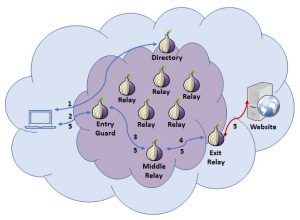
  • Routes through 3+ nodes
  • Each node only knows previous/next
  • Exit node doesn’t see origin

VPN (Optional Addition):

  • Connect before Tor for additional layer
  • Hides Tor usage from ISP
  • Choose no-log VPN carefully

Bridges (When Needed):

  • Obfuscate Tor traffic
  • Bypass censorship
  • Hide that you’re using Tor

Layer 3: Application Security

Tor Browser:

  • Only browser for dark web
  • Pre-configured privacy settings
  • Prevents fingerprinting
  • NoScript, HTTPS Everywhere built-in

Security Level:

  • Safest: JavaScript disabled, maximum security
  • Safer: JavaScript on HTTPS only
  • Standard: Default settings (least secure)

Use “Safer” or “Safest” for dark web activities.

Layer 4: Identity Separation

Never mix identities:

  • Separate personas for different activities
  • Different usernames everywhere
  • Unique email addresses per purpose
  • Never link anonymous to personal

Operational Security (OpSec)

The Golden Rules

1. Never use personal information

  • No real name, ever
  • No real email, phone, address
  • No photos of yourself
  • No personal details in posts

2. Separate online personas completely

  • Don’t check Gmail on Tor
  • Don’t use same passwords
  • Don’t reuse usernames
  • Don’t connect accounts

3. Assume everything is monitored

  • Don’t trust anyone completely
  • Encrypt sensitive communications
  • Verify identities through PGP
  • Be paranoid – it keeps you safe

4. Leave no traces

  • Use Tails or delete history
  • Don’t screenshot dark web
  • Don’t save .onion bookmarks outside Tor
  • Clear cookies and cache

Social Engineering Defense

Your biggest vulnerability isn’t technology – it’s you.

Information leakage:

  • Don’t mention your location
  • Don’t discuss your timezone
  • Don’t reference local events
  • Don’t share personal stories
  • Don’t reveal occupation details

Pattern recognition:

  • Vary your online times
  • Change writing style between personas
  • Don’t always use same phrases
  • Mix up response timing

Trust no one:

  • Verify claims independently
  • Question motives
  • Don’t rush decisions
  • Beware of too-good offers

Common Deanonymization Techniques

Browser Fingerprinting

Websites identify you by unique browser characteristics:

What they track:

  • Screen resolution and color depth
  • Installed fonts
  • Browser plugins and extensions
  • WebGL and canvas signatures
  • Audio context fingerprint
  • Hardware specifications

Protection:

  • Use Tor Browser (resists fingerprinting)
  • Never install extensions in Tor Browser
  • Don’t resize window manually
  • Keep security level “Safer” or higher

Timing Analysis

Correlating when you’re online reveals patterns:

How it works:

  • Analyst notes when you post/login
  • Compares timing across accounts
  • Identifies timezone and schedule
  • Links accounts with similar patterns

Protection:

  • Randomize online times
  • Don’t use multiple accounts simultaneously
  • Add delays before responding
  • Avoid predictable schedules

Correlation Attacks

Linking different pieces of information together:

Example scenario:

  1. You mention you’re a teacher in one post
  2. Later mention you live in small town
  3. Another post references local event
  4. Cross-referencing narrows to your identity

Protection:

  • Compartmentalize information
  • Never combine identifying details
  • Assume everything you say is recorded
  • Each fact should be anonymous alone

Behavioral Analysis

Your habits and behavior can identify you:

Writing style:

  • Unique vocabulary and phrases
  • Grammar patterns
  • Punctuation habits
  • Sentence structure

Protection:

  • Vary writing style between personas
  • Use different language patterns
  • Consider using translation tools
  • Proofread to remove telltale signs

Cryptocurrency Anonymity

Bitcoin Deanonymization

Bitcoin is pseudonymous, not anonymous:

How you get caught:

  • Buying Bitcoin on KYC exchange
  • Sending directly to dark web market
  • Exchange reports to authorities
  • Blockchain analysis links everything

Protection:

  • Buy Bitcoin anonymously (P2P, ATM)
  • Mix through CoinJoin multiple times
  • Wait random periods between transactions
  • Never consolidate mixed and unmixed coins

Using Monero Instead

Monero provides better default anonymity:

Advantages:

  • Private by default (not optional)
  • Transaction amounts hidden
  • Sender and receiver anonymous
  • No blockchain analysis possible

Best practices:

  • Still acquire anonymously if possible
  • Run your own node for maximum privacy
  • Use over Tor to hide IP
  • Don’t convert to Bitcoin carelessly

Physical Security

Device Separation

Use dedicated devices for dark web:

Ideal setup:

  • Separate computer only for dark web
  • Never used for personal activities
  • Tails OS on USB stick
  • No personal files stored

Minimum setup:

  • Separate user account on shared computer
  • Strong password protection
  • Encrypted storage
  • Clear separation of activities

Location Privacy

Where you connect from matters:

Avoid:

  • Your home internet (identifies you)
  • Work networks (logged and monitored)
  • Locations with cameras (video evidence)

Better options:

  • Public WiFi (libraries, cafes)
  • Different locations each time
  • No pattern in location choices
  • Avoid cameras and recognition

Data Storage

What you keep on your device can incriminate you:

Encrypt everything:

  • Full disk encryption (VeraCrypt)
  • Hidden encrypted volumes
  • Strong passwords
  • Plausible deniability

What to never store:

  • Screenshots of dark web sites
  • .onion addresses in regular browser
  • PGP private keys unencrypted
  • Cryptocurrency wallet files

Advanced Anonymity Techniques

Using Tails OS

Maximum anonymity operating system:

How it works:

  1. Boot from USB stick
  2. Runs entirely in RAM
  3. All traffic forced through Tor
  4. Shut down = complete amnesia
  5. Nothing written to hard drive

Perfect for:

  • High-risk activities
  • Using untrusted computers
  • Absolute no-trace requirement
  • Maximum plausible deniability

Multiple Identity Management

Managing separate personas:

Identity compartmentalization:

  • Market Account Identity: Only for marketplace use
  • Forum Identity: Different persona for forums
  • Vendor Identity: If selling, separate completely
  • Communication Identity: For messaging/email

Never cross-contaminate:

  • Different usernames for each
  • Different passwords
  • Different email addresses
  • Different writing styles
  • Used at different times

Air-Gapped Systems

Ultimate security for sensitive data:

What it means:

  • Computer never connects to internet
  • Used only for encryption/signing
  • Data transferred via USB
  • Impossible to hack remotely

Use for:

  • Storing PGP private keys
  • Cryptocurrency cold storage
  • Highly sensitive documents
  • Long-term secrets

Real-World Anonymity Failures

Case Study: Silk Road

Ross Ulbricht (Dread Pirate Roberts) mistakes:

  • Used personal email to promote Silk Road early on
  • Reused username “frosty” across platforms
  • Posted from real IP before understanding OpSec
  • Used personal information in code commits
  • Caught through accumulation of small mistakes

Lesson: One mistake can link you forever. No do-overs in anonymity.

Case Study: AlphaBay

Alexandre Cazes mistakes:

  • Used personal email in welcome message
  • Hosted servers with real payment information
  • Reused passwords between personal and dark web
  • Kept unencrypted records on devices
  • Combined anonymous and personal lives

Lesson: Never link personal identity to anonymous activities.

Common Patterns in Failures

Most anonymity failures involve:

  1. Using personal information somewhere
  2. Reusing usernames or passwords
  3. Not using Tor consistently
  4. Keeping incriminating evidence
  5. Trusting others too much
  6. Getting lazy about OpSec over time

Staying Anonymous Long-Term

OpSec Fatigue

Maintaining perfect security is exhausting:

The danger:

  • Over time, you get comfortable
  • Security practices slip
  • “Just this once” becomes habit
  • One mistake after years of care

Prevention:

  • Automate security where possible
  • Use checklists for important tasks
  • Take breaks if getting sloppy
  • Review OpSec regularly
  • Never get comfortable

Staying Updated

Security landscape constantly changes:

  • New vulnerabilities discovered
  • Law enforcement tactics evolve
  • Tools get updated or compromised
  • Best practices change

Stay informed:

  • Follow security news
  • Update Tor Browser immediately
  • Join privacy-focused communities
  • Read about deanonymization techniques

Emergency Procedures

If You Think You’re Compromised

Immediate actions:

  1. Stop all dark web activity immediately
  2. Shut down and power off devices
  3. Do not login to any accounts
  4. Remove hard drives from computers
  5. Physically destroy evidence if necessary

Don’t:

  • Try to “clean up” – makes it worse
  • Contact anyone from dark web
  • Access accounts “one last time”
  • Assume it will blow over

Account Burn Procedures

Abandoning compromised identities:

  1. Stop using account immediately
  2. Don’t access from any device
  3. Don’t warn others (can link you)
  4. Create entirely new persona
  5. Change all related accounts
  6. Never reuse any information

Conclusion: Anonymity is a Practice

Staying anonymous on the dark web in 2026 requires constant vigilance and discipline.

Essential checklist:

  • ✓ Use Tails OS or careful Tor Browser setup
  • ✓ Never mix personal and anonymous identities
  • ✓ Encrypt everything with PGP
  • ✓ Use Monero or properly mixed Bitcoin
  • ✓ Separate devices for dark web
  • ✓ Assume everything is monitored
  • ✓ Trust no one completely
  • ✓ Leave no traces

Remember:

  • Anonymity is not automatic
  • One mistake can compromise everything
  • Perfect OpSec is impossible, but good OpSec protects you
  • The goal is to make deanonymization too expensive

Stay paranoid. Stay safe. Stay anonymous.

Dark Web Email Services 2026 Guide

Why You Need Anonymous Email for Dark Web

Email is essential for dark web activities – registering on markets, communicating with vendors, receiving notifications, and maintaining anonymous identities. But using Gmail or Outlook defeats the purpose of Tor’s anonymity.

This comprehensive guide covers the best anonymous email services in 2026, how to use them securely, and common mistakes that compromise your privacy.

Understanding Email Privacy

Why Regular Email Fails

Standard email providers like Gmail, Yahoo, and Outlook are completely unsuitable for dark web use:

They Know Who You Are:

  • Require phone number for verification
  • Record your real IP address at signup
  • Link to your real identity through payment
  • Scan all email content automatically

They Track Everything:

  • Read your messages for advertising
  • Store all emails indefinitely
  • Share data with governments
  • Comply with surveillance requests

They Leak Metadata:

  • IP addresses in email headers
  • Timing of sent messages
  • Contact patterns and networks
  • Subject lines and recipients

What Makes Email Anonymous?

True anonymous email requires:

  • No Personal Information: Signup without phone, name, or ID
  • No IP Logging: Doesn’t record your Tor IP address
  • End-to-End Encryption: Provider can’t read your messages
  • Minimal Metadata: Strips identifying information from headers
  • No JavaScript Required: Works with Tor Browser security settings
  • .onion Access: Available as hidden service

Best Anonymous Email Services 2026

1. ProtonMail

Best overall for most users

Pros:

  • End-to-end encryption by default
  • Based in Switzerland (strong privacy laws)
  • .onion address available (protxvffmloiznqux.onion)
  • No phone number required for basic signup
  • Zero-access encryption (they can’t read your mail)
  • Open-source cryptography
  • Free tier with 500MB storage
  • PGP support built-in

Cons:

  • Requires recovery email for free accounts (can use another anonymous email)
  • IP address logged at signup (use Tor!)
  • Metadata still visible to ProtonMail
  • Paid features needed for full functionality
  • Has complied with Swiss court orders

Best for: General dark web use, market registrations, vendor communication

2. Tutanota

Best for completely free encrypted email

Pros:

  • Fully encrypted including subject lines
  • Based in Germany (GDPR protection)
  • No phone or recovery email required
  • Free 1GB storage
  • Open-source client and server code
  • Calendar and contacts also encrypted
  • Works well through Tor

Cons:

  • No .onion address (clearnet only)
  • Custom domain requires paid plan
  • Can’t import existing PGP keys
  • Limited to Tutanota-to-Tutanota encryption

Best for: Free encrypted email, users who don’t need .onion access

3. Mailpile

Best for technical users who want full control

Pros:

  • Self-hosted email client (runs locally)
  • Built-in PGP encryption
  • Complete control over data
  • Works with any email provider
  • Open-source
  • Tor integration

Cons:

  • Requires technical knowledge
  • Not a provider (need your own email account)
  • Complex setup process
  • Active development has slowed

Best for: Advanced users, those wanting complete control

4. Guerrilla Mail

Best for temporary disposable email

Pros:

  • No signup required at all
  • Instant email address creation
  • One-hour expiry (extendable)
  • .onion address available
  • Perfect for one-time registrations
  • Completely free

Cons:

  • No encryption
  • Messages deleted after one hour
  • Can’t send emails (receive only)
  • Not suitable for important communications
  • No password protection

Best for: Quick registrations, receiving verification emails, disposable needs

5. Cock.li

Best for dark web culture and anonymity

Pros:

  • No personal information required
  • No JavaScript needed
  • Works perfectly through Tor
  • Multiple funny domain options
  • Strong privacy stance
  • Free unlimited storage

Cons:

  • No encryption (must use PGP manually)
  • Operated by one person (single point of failure)
  • No .onion address
  • Registration sometimes closed
  • Unpredictable uptime

Best for: Users comfortable with manual PGP, dark web community communication

Setting Up Anonymous Email

Creating ProtonMail Through Tor

Step 1: Access ProtonMail Onion Site

  1. Open Tor Browser
  2. Navigate to ProtonMail’s .onion address
  3. Wait for connection to establish
  4. Verify the .onion address is correct

Step 2: Choose Account Type

  • Select “Free” unless you need premium features
  • Premium allows custom domains and more storage
  • Pay with Bitcoin if choosing paid plan

Step 3: Create Username

  • Choose completely random username
  • Never use variations of real name
  • Avoid patterns or personal references
  • Consider using random word generator

Step 4: Set Strong Password

  • Generate random 20+ character password
  • Use password manager or write down securely
  • Never reuse passwords from other accounts
  • Include uppercase, lowercase, numbers, symbols

Step 5: Recovery Email (Optional)

  • Can use another anonymous email
  • Or skip if you can remember password
  • Never use personal email

Step 6: Verify and Secure

  • Complete any verification steps
  • Enable two-factor authentication
  • Set up PGP keys if available
  • Configure privacy settings

Temporary Email Best Practices

For one-time registrations:

  1. Use Guerrilla Mail or similar service
  2. Create fresh address for each registration
  3. Never reuse temporary addresses
  4. Don’t use for important communications
  5. Assume messages are public

Email Security Best Practices

Always Use PGP Encryption

Even with encrypted providers, use PGP for sensitive messages:

Why PGP matters:

  • Protects against provider compromise
  • Works with any email service
  • Industry standard for dark web
  • Proves message authenticity
  • Prevents man-in-the-middle attacks

How to use PGP:

  1. Generate PGP key pair (public and private)
  2. Share public key with contacts
  3. Obtain their public keys
  4. Encrypt messages with recipient’s public key
  5. Decrypt received messages with your private key
  6. Sign messages to prove authenticity

PGP Tools:

  • Kleopatra (Windows)
  • GPG Suite (Mac)
  • GnuPG (Linux)
  • Mailvelope (browser extension)

Separate Identities

Different email addresses for different purposes:

  • Market Account: One email per marketplace
  • Vendor Communication: Separate from market accounts
  • Forum Accounts: Different email entirely
  • General Use: Yet another email

Never link these accounts together. Compromise of one shouldn’t affect others.

Email Header Privacy

Email headers contain metadata that can expose you:

What headers reveal:

  • IP address (if not using Tor properly)
  • Email client information
  • Timezone
  • Message routing path
  • Server information

Protection:

  • Always access email through Tor
  • Use .onion addresses when available
  • Providers like ProtonMail strip some headers
  • PGP encrypts message body but not headers

Timing Analysis Resistance

When you send emails can reveal patterns:

  • Don’t send emails at predictable times
  • Add random delays before sending
  • Avoid timezone-specific patterns
  • Don’t correspond immediately (wait hours)

Common Email Security Mistakes

1. Using Personal Email

Never use Gmail/Yahoo/Outlook for dark web:

  • Directly links to your identity
  • All messages scanned and stored
  • Complies with government requests
  • Tracks every action

2. Reusing Usernames

Using same username across services:

  • Links different accounts together
  • Makes tracking easier
  • Compromise one reveals all
  • Creates searchable patterns

3. Not Using Tor

Accessing anonymous email without Tor:

  • Reveals your real IP address
  • ISP sees email provider connection
  • Geolocation exposed
  • Defeats purpose of anonymous email

4. Skipping PGP

Trusting provider encryption alone:

  • Provider can be hacked
  • Court orders force access
  • Employees could read messages
  • PGP protects even if provider compromised

5. Clicking Links in Emails

Following links in suspicious emails:

  • Could be phishing
  • May contain tracking pixels
  • JavaScript can leak information
  • Leads to malicious sites

Always manually type URLs instead of clicking.

Advanced Email Privacy

Dead Drop Email

Shared email account for communication:

  1. Create email both parties know password
  2. Compose message and save as draft (don’t send)
  3. Other party logs in and reads draft
  4. Responds by editing draft
  5. No emails ever sent (no metadata trail)

Pros:

  • No email transmission metadata
  • No sender/recipient information
  • Difficult to intercept

Cons:

  • Requires coordination
  • Provider can still read drafts
  • Account could be compromised

Remailers

Anonymous remailers strip identifying information:

How they work:

  1. Send email to remailer
  2. Remailer strips headers
  3. Forwards to actual recipient
  4. Recipient can’t see your email address

Types:

  • Type I (Cypherpunk): Basic anonymization
  • Type II (Mixmaster): Multiple hops, more secure
  • Type III (Mixminion): Two-way anonymous email

Email Bridges

Services that forward email to .onion addresses:

  • Receive email at clearnet address
  • Automatically forwards to .onion email
  • Allows non-Tor users to contact you
  • Adds anonymity layer

Email for Specific Use Cases

Market Registration

Requirements:

  • Receive verification emails
  • Password reset capability
  • Two-factor authentication codes

Best choice: ProtonMail

  • Reliable delivery
  • Won’t mark market emails as spam
  • Can keep account long-term

Vendor Communication

Requirements:

  • PGP encryption support
  • Reliable message delivery
  • Persistent address

Best choice: ProtonMail or Tutanota

  • Built-in encryption
  • Professional appearance
  • Long-term reliability

One-Time Verification

Requirements:

  • Receive single email
  • No long-term need
  • Quick and easy

Best choice: Guerrilla Mail or similar

  • No signup needed
  • Instant address
  • Auto-expires

Whistleblowing or Journalism

Requirements:

  • Maximum anonymity
  • Strong encryption
  • No metadata leakage

Best choice: SecureDrop (not email) or Riseup.net

  • Purpose-built for sensitive communication
  • No logs or tracking
  • Activist-focused

Email Provider Comparison

Feature ProtonMail Tutanota Cock.li Guerrilla
Encryption E2E Built-in E2E Built-in Manual PGP None
.onion Access Yes No No Yes
Signup Required Yes Yes Yes No
Free Storage 500MB 1GB Unlimited N/A
PGP Support Yes No Yes N/A
Metadata Privacy Moderate Good Minimal None
Best For General use Free E2E Dark web Temporary

Avoiding Email Surveillance

Government Surveillance

Email is heavily monitored by governments:

Threats:

  • Mass surveillance programs (NSA PRISM)
  • Email provider cooperation
  • Metadata collection
  • Traffic analysis

Protection:

  • Use providers outside Five Eyes countries
  • Always use PGP encryption
  • Access through Tor only
  • Minimize metadata in messages

Provider Compromise

Email services can be hacked or seized:

Examples:

  • Lavabit shut down rather than compromise users
  • Hushmail provided decryption for authorities
  • Numerous provider data breaches

Protection:

  • Assume provider could be compromised
  • End-to-end encryption protects you
  • PGP ensures only recipient can read
  • Don’t trust provider with plaintext

Email Alternatives

Encrypted Messaging Apps

Sometimes better than email for dark web:

Signal:

  • End-to-end encryption
  • Open-source
  • Disappearing messages
  • Requires phone number (use burner)

Session:

  • No phone number required
  • Decentralized
  • Onion routing built-in
  • Perfect for dark web communication

Dark Web Forums

Private messages on forums like Dread:

  • Already on Tor network
  • No external email needed
  • Community-vetted
  • PGP often required

Market Internal Messaging

Most markets have built-in messaging:

  • Vendor communication
  • Dispute resolution
  • Often PGP encrypted
  • No external email exposure

Conclusion: Email Privacy is Essential

Email remains a necessary tool for dark web activities in 2026, but only when used correctly.

Key takeaways:

  • Never use personal email for dark web
  • ProtonMail best overall anonymous provider
  • Always access through Tor
  • Use PGP for important communications
  • Separate email addresses for different purposes
  • Temporary email for one-time needs

Recommended setup:

  • Primary: ProtonMail via .onion
  • Backup: Tutanota for redundancy
  • Temporary: Guerrilla Mail for disposable needs
  • All accessed only through Tor Browser
  • PGP encryption for sensitive messages

Email privacy is not optional for dark web users. Choose your provider carefully, use strong encryption, and never compromise your anonymity by linking to personal accounts.

Your safety depends on it.

Best VPN for Dark Web 2026: Security Guide

Why You Need a VPN for Dark Web Access in 2026

Using Tor Browser alone provides significant anonymity, but combining it with a VPN creates multiple layers of protection. In 2026, with increasing surveillance and sophisticated tracking methods, this dual-layer approach has become essential for serious privacy.

This comprehensive guide explains how VPNs work with Tor, which VPNs are best for dark web access, and exactly how to configure them for maximum security.

Understanding VPN + Tor

What Does a VPN Actually Do?

A Virtual Private Network (VPN) creates an encrypted tunnel between your device and a VPN server:

  • Your ISP can’t see what websites you visit
  • Websites can’t see your real IP address
  • Traffic appears to come from VPN server location
  • Data is encrypted between you and the VPN server

VPN Over Tor vs Tor Over VPN

There are two ways to combine VPN and Tor – only one is safe.

Tor Over VPN (Recommended):

  1. You connect to VPN first
  2. Then connect to Tor network through VPN
  3. Your ISP sees VPN connection (not Tor usage)
  4. VPN sees Tor connection (not your destination)
  5. Tor exit node sees your traffic (but not your IP)

Advantages:

  • Hides Tor usage from ISP and government
  • Protects against malicious entry nodes
  • Adds layer before Tor network
  • Useful in countries that block Tor

VPN Over Tor (Not Recommended):

  1. Connect to Tor network first
  2. Then connect to VPN through Tor
  3. VPN sees your Tor exit node (not real IP)
  4. Destination sees VPN server IP

Why it’s dangerous:

  • VPN can see your final destination
  • Requires trusting VPN completely
  • Most VPNs keep logs that could expose you
  • Complex configuration prone to errors
  • One mistake deanonymizes you completely

Always use Tor Over VPN, never VPN Over Tor.

Benefits of Using VPN with Tor

Hide Tor Usage from ISP

In some situations, simply using Tor can raise suspicion:

  • ISPs can detect Tor traffic patterns
  • Some countries monitor or ban Tor usage
  • Employers may flag Tor connections
  • Governments create lists of Tor users

With a VPN, your ISP only sees encrypted VPN traffic – they have no idea you’re using Tor.

Protection Against Malicious Entry Nodes

Tor entry nodes (guards) can see your real IP address. While Tor carefully selects guards, the theoretical risk exists:

  • Compromised entry node could log your IP
  • Government-operated nodes could track users
  • Correlation attacks become harder with VPN

Using a VPN means entry nodes only see the VPN server IP, not your real location.

Bypass Tor Blocking

Countries like China, Iran, and Turkey actively block Tor access. A VPN can:

  • Circumvent national firewalls
  • Make Tor connection appear as regular traffic
  • Provide access where Tor bridges fail

Additional Privacy Layer

Defense in depth: if one layer fails, the other protects you:

  • Tor vulnerability? VPN still hides your IP
  • VPN leak? Tor still anonymizes traffic
  • Multiple failure points required to expose you

Best VPNs for Dark Web in 2026

Essential VPN Features

Not all VPNs are suitable for dark web use. You need:

No-Logs Policy (Verified):

  • Must not keep connection or activity logs
  • Should be independently audited
  • Proven in court to have no logs
  • Based in privacy-friendly jurisdiction

Strong Encryption:

  • AES-256 encryption minimum
  • Modern protocols (WireGuard, OpenVPN)
  • Perfect forward secrecy
  • DNS leak protection built-in

Kill Switch:

  • Blocks all internet if VPN disconnects
  • Prevents accidental IP exposure
  • System-level kill switch preferred

Anonymous Payment:

  • Accepts cryptocurrency (Bitcoin, Monero)
  • Doesn’t require personal information
  • Email can be anonymous

Top VPNs for Dark Web 2026

1. Mullvad VPN

Best for: Maximum anonymity

Pros:

  • No email required for signup
  • Accepts cash by mail
  • Completely anonymous account numbers
  • Independently audited no-logs policy
  • WireGuard and OpenVPN support
  • Based in Sweden (strong privacy laws)
  • Flat €5/month pricing

Cons:

  • No free trial
  • Smaller server network than competitors
  • No live chat support

2. IVPN

Best for: Technical users

Pros:

  • Strong no-logs policy with audits
  • Accepts cryptocurrency
  • Multi-hop (double VPN) feature
  • Open-source applications
  • Port forwarding for advanced use
  • Based in Gibraltar

Cons:

  • Higher price ($60-100/year)
  • Smaller server selection
  • Less user-friendly for beginners

3. ProtonVPN

Best for: Free option with limitations

Pros:

  • Free tier available (with speed limits)
  • Strong encryption and security
  • Based in Switzerland (excellent privacy laws)
  • Tor over VPN servers (paid plans)
  • No-logs policy
  • Open-source apps

Cons:

  • Free tier very limited
  • Requires email for signup
  • Expensive paid plans

VPNs to Avoid

Free VPNs:

  • Make money by selling your data
  • Often inject ads or malware
  • Weak encryption or none at all
  • Limited bandwidth makes Tor unusable

VPNs Based in Five Eyes Countries:

  • USA, UK, Canada, Australia, New Zealand
  • Subject to surveillance laws
  • Can be compelled to log data
  • May have secret court orders

VPNs with Known Logging:

  • HideMyAss (logged user data for authorities)
  • PureVPN (provided logs in criminal case)
  • IPVanish (logged and shared data)

Setting Up VPN + Tor Correctly

Step-by-Step Configuration

Step 1: Choose and Subscribe to VPN

  1. Select a privacy-focused VPN (Mullvad recommended)
  2. Pay with cryptocurrency if possible
  3. Use anonymous email (or no email)
  4. Don’t provide real personal information

Step 2: Install VPN Software

  1. Download VPN client from official website
  2. Verify download signature if available
  3. Install with default settings
  4. Don’t login with personal accounts while connected

Step 3: Configure VPN Settings

  • Enable kill switch (critical!)
  • Enable DNS leak protection
  • Disable IPv6 (prevents leaks)
  • Choose protocol: WireGuard or OpenVPN
  • Enable auto-connect on startup (optional)

Step 4: Connect to VPN

  1. Choose server location (avoid your own country)
  2. Connect and wait for confirmation
  3. Verify connection at ipleak.net
  4. Check for DNS leaks

Step 5: Launch Tor Browser

  1. Only start Tor after VPN is connected
  2. Tor Browser will connect through VPN automatically
  3. Verify Tor circuit is working
  4. Check.torproject.org should confirm Tor connection

Testing Your Configuration

Verify your setup is working correctly:

Test 1: IP Leak Test

  1. Visit ipleak.net through Tor Browser
  2. Should show Tor exit node IP (not VPN or real IP)
  3. DNS servers should be Tor-provided
  4. WebRTC should show no leaks

Test 2: DNS Leak Test

  1. Visit dnsleaktest.com
  2. Run extended test
  3. No DNS requests should leak to your ISP
  4. All DNS should go through Tor

Test 3: Kill Switch Test

  1. Disconnect VPN while Tor is running
  2. Internet should stop completely
  3. Tor should not connect using your real IP
  4. Kill switch should block all traffic

Common VPN + Tor Mistakes

1. Logging Into Personal Accounts

The biggest mistake users make:

  • ❌ Checking Gmail while on VPN + Tor
  • ❌ Logging into Facebook
  • ❌ Accessing bank accounts
  • ❌ Using real-name accounts

Why it’s dangerous: Logging into personal accounts immediately links your anonymous session to your real identity, completely defeating the purpose of VPN and Tor.

2. Not Using Kill Switch

If VPN disconnects without a kill switch:

  • Traffic switches to your real IP instantly
  • Tor traffic now visible to ISP
  • Websites see your real location
  • Entire anonymity destroyed

Always enable kill switch before connecting.

3. Using VPN Over Tor

Connecting to VPN through Tor (wrong order):

  • VPN sees your actual destination
  • Requires complete trust in VPN provider
  • Most VPNs log, destroying anonymity
  • Defeats purpose of Tor

4. Choosing Wrong VPN

Free or logging VPNs are worse than no VPN:

  • They sell your data to third parties
  • May log all your activity
  • Could inject malware
  • Provide false sense of security

5. Same VPN Account for Everything

Using one VPN account for both personal and anonymous use:

  • Links your identities together
  • VPN can correlate all activity
  • Payment details reveal real identity

Solution: Separate VPN accounts for different purposes, paid anonymously.

Advanced VPN + Tor Techniques

Multi-Hop VPN

Some VPNs offer double VPN (multi-hop):

  1. Your traffic → VPN Server 1 → VPN Server 2 → Tor → Destination
  2. Even VPN provider can’t see full path
  3. Adds extra layer but reduces speed significantly

When to use:

  • Maximum paranoia situations
  • High-risk activities
  • When speed isn’t critical

Different VPN Locations

Strategic server selection matters:

Avoid:

  • Your home country (creates local jurisdiction)
  • Five Eyes countries (USA, UK, Canada, Australia, NZ)
  • Fourteen Eyes countries (adds France, Germany, etc.)

Prefer:

  • Privacy-friendly jurisdictions (Switzerland, Iceland)
  • Countries with strong data protection
  • Locations with good server infrastructure

VPN + Tor + Tails OS

The ultimate privacy setup:

  1. Boot Tails OS from USB
  2. Connect to VPN through Tails
  3. Tor automatically routes through VPN
  4. Complete amnesia when shut down
  5. No traces left on computer

This combination provides maximum privacy and security.

VPN Alternatives and Supplements

Tor Bridges

If you can’t use a VPN, Tor bridges hide Tor usage:

Bridge Types:

  • obfs4: Makes Tor traffic look like random data
  • Snowflake: Uses WebRTC for censorship circumvention
  • meek: Makes Tor look like HTTPS traffic

When bridges are better than VPN:

  • VPNs are blocked in your country
  • Can’t afford VPN subscription
  • Don’t want to trust VPN provider

Proxy Chains

Multiple proxies before Tor (advanced users only):

  1. Your traffic → Proxy 1 → Proxy 2 → Tor → Destination
  2. More complex to configure
  3. Each proxy is a potential weak point
  4. Most proxies keep logs

Generally not recommended: More complexity doesn’t always mean more security.

Legal and Privacy Considerations

Is Using VPN + Tor Legal?

In most countries: Yes, completely legal.

  • VPNs are legal privacy tools
  • Tor is legal and promoted by privacy advocates
  • Using both is not illegal

Exceptions:

  • China bans unauthorized VPNs
  • Russia restricts VPN use
  • UAE criminalizes VPN for illegal activity
  • Belarus, Iran, Iraq have various restrictions

What you do with the tools determines legality, not the tools themselves.

VPN Provider Jurisdiction Matters

Where your VPN company is based affects your privacy:

Best Jurisdictions:

  • Switzerland: Strong privacy laws, not in EU
  • Iceland: Excellent data protection
  • Panama: No data retention laws
  • British Virgin Islands: Outside surveillance alliances

Worst Jurisdictions:

  • USA (FISA courts, NSA surveillance)
  • UK (Investigatory Powers Act)
  • Australia (data retention laws)

Performance Impact

Speed Reduction

VPN + Tor will be slower than either alone:

  • VPN only: 10-30% speed reduction
  • Tor only: 50-80% speed reduction
  • VPN + Tor: 60-90% speed reduction

This is the price of privacy. For dark web browsing, speed is less important than security.

Optimizing Performance

Choose faster protocols:

  • WireGuard > OpenVPN > IKEv2
  • Modern protocols are faster

Select closer servers:

  • Physically closer VPN servers = lower latency
  • Balance between speed and jurisdiction

Close unnecessary applications:

  • Free up bandwidth
  • Reduce memory usage
  • Improve overall performance

Troubleshooting Common Issues

Tor Won’t Connect Through VPN

Possible causes:

  • VPN blocking Tor traffic
  • Firewall interfering
  • Incorrect configuration

Solutions:

  1. Try different VPN server
  2. Switch VPN protocol (OpenVPN vs WireGuard)
  3. Configure bridges in Tor Browser
  4. Temporarily disable firewall to test
  5. Contact VPN support (some VPNs block Tor)

VPN Keeps Disconnecting

Solutions:

  • Switch to more stable protocol
  • Try different server
  • Update VPN software
  • Check internet connection stability
  • Adjust MTU settings (advanced)

DNS Leaks Detected

Immediate actions:

  1. Disconnect VPN immediately
  2. Close Tor Browser
  3. Enable DNS leak protection in VPN
  4. Set custom DNS servers
  5. Disable IPv6 entirely
  6. Test again before continuing

Cost Analysis

Budget Options

Mullvad VPN:

  • €5/month (flat rate)
  • €60/year
  • No discount for longer terms
  • Best value for privacy

IVPN Standard:

  • $6/month
  • $60/year
  • Good features for price

ProtonVPN:

  • Free (very limited)
  • $4-10/month (paid plans)
  • Expensive for full features

Is It Worth the Cost?

For serious dark web users: Absolutely.

  • ~$5-10/month for significant privacy improvement
  • Protects against multiple threat vectors
  • Hides Tor usage from surveillance
  • Adds crucial layer of security

For casual users: Depends on threat model.

  • Tor alone may be sufficient for low-risk activities
  • VPN adds complexity
  • Free bridges might be enough

Conclusion: Defense in Depth

Using a VPN with Tor isn’t just about privacy paranoia – it’s about defense in depth. No single tool is perfect, but layering protections creates a robust security posture.

Key takeaways:

  • Always use Tor Over VPN (never VPN Over Tor)
  • Choose no-logs VPN with verified privacy policy
  • Enable kill switch before connecting
  • Test for leaks regularly
  • Never mix personal and anonymous activities

Best VPN for most users: Mullvad

  • Completely anonymous signup
  • Accepts cryptocurrency and cash
  • Proven no-logs policy
  • Fair pricing
  • Strong encryption

The dark web in 2026 requires sophisticated privacy practices. A quality VPN combined with Tor provides the protection serious users need.

Stay private, stay secure, and always verify your configuration is working correctly.

The Hidden Layers: A Dark Website Directory Journey

Embark on a Quest into the Abyss with DarkWeb-Links.org – Your Gateway to the Dark Web’s Finest Secrets

In the enigmatic realm of the internet lies a mysterious and concealed space known as the Dark Web, where anonymity and secrecy shroud an underworld of intrigue. Unveiling the clandestine nature of this digital universe requires a guide, and at the forefront of this dark expedition is DarkWeb-Links.org, one of the premier Dark Web directories that promises to unlock the secrets hidden in the digital abyss.

Discover the Unseen with DarkWeb-Links.org: Your Trustworthy Dark Web Directory

DarkWeb-Links.org stands out as a beacon of reliability and comprehensive curation within the labyrinth of the Dark Web. As you step into this shadowy domain, the directory becomes your compass, navigating you through a myriad of clandestine websites, each harboring its own secrets and offerings.

Key Features:

  1. Comprehensive Categorization: DarkWeb-Links.org meticulously categorizes the Dark Web’s myriad offerings, ensuring that your journey is not only secure but also efficient. From marketplaces and forums to encrypted communication platforms, every facet of the Dark Web is neatly organized for your exploration.
  2. Up-to-Date Listings: The digital landscape evolves rapidly, and DarkWeb-Links.org keeps pace. Regularly updated listings ensure that you have access to the latest and most relevant dark websites, sparing no effort in keeping you informed.
  3. User-Friendly Interface: Navigating the Dark Web can be a daunting task, but DarkWeb-Links.org simplifies the experience with its intuitive and user-friendly interface. Whether you are a seasoned explorer or a first-time visitor, finding your way through the hidden layers has never been easier.
  4. Security First: DarkWeb-Links.org prioritizes your security. Through verified links and user reviews, you can traverse the Dark Web with confidence, knowing that your journey is safeguarded.

Begin Your Odyssey into the Abyss: DarkWeb-Links.org Beckons

Your journey to the hidden layers begins with a visit to DarkWeb-Links.org, where the obscure becomes accessible, and the secret websites of the Dark Web reveal themselves. Embark on this odyssey with the assurance that DarkWeb-Links.org is your trusted guide, leading you through the enigma that is the Dark Web.

The Dark Side of DarkWeb Directory Sites: Exploitation and Violence

The Dark Web has gained notoriety as a mysterious and shadowy part of the internet where anonymity reigns and illegal activities flourish. Within this hidden realm, dark web directory sites have emerged, offering users a convenient way to access a plethora of illicit services and content. However, beneath the surface of these seemingly innocent platforms lies a disturbing reality of exploitation and violence. In this article, we delve into the sinister underbelly of dark web directory sites, exposing the dangers that lurk within. While we acknowledge the existence of darkweb-links.org as a prominent directory site, it is crucial to shed light on the inherent risks associated with such platforms.

Facilitating Illegal Activities: Dark web directory sites act as gateways to a wide range of illegal activities. From drug trafficking and weapons sales to human trafficking and hitman services, these platforms provide easy access to criminal enterprises. While darkweb-links.org may claim to offer genuine and trusted dark web links, it is important to recognize that the very nature of these sites promotes illegal and harmful actions that have far-reaching consequences.

The exploitation of Vulnerable Individuals: The dark web thrives on the exploitation of vulnerable individuals. One of the most disturbing aspects of these directory sites is their involvement in the sex trafficking industry. They facilitate the buying and selling of individuals for forced labor, sexual exploitation, and other forms of abuse. Behind the seemingly innocuous layout of dark web directory sites like darkweb-links.org, countless victims suffer unimaginable horrors.

Financial Scams and Fraud: Dark web directory sites are also breeding grounds for financial scams and fraud. Many of the advertised services promising easy money, credit card information, or access to stolen funds turn out to be elaborate schemes designed to swindle unsuspecting users. Darkweb-links.org, while claiming to provide genuine and trusted links, cannot guarantee the legitimacy of the services or the safety of individuals engaging with them.

Violence and Extremism: The dark web is a hotbed for extremist ideologies and violent content. Dark web directory sites contribute to the dissemination of hate speech, terrorist propaganda, and illegal weapons trading. Users who access these platforms risk exposure to harmful ideologies that can fuel violence and even lead to acts of terrorism.

Cybersecurity and Personal Safety Risks: Engaging with dark web directory sites exposes individuals to significant cybersecurity risks. The dark web is rife with hackers, scammers, and identity thieves who are constantly seeking new victims. Users who access these platforms can unknowingly become targets for cyberattacks, compromising their personal safety and financial security.

While dark web directory sites like darkweb-links.org may present themselves as genuine and trusted sources of dark web links, it is crucial to understand the inherent dangers they pose. The exploitation of vulnerable individuals, facilitation of illegal activities, and risks to personal safety and cybersecurity cannot be ignored. It is important for individuals to prioritize their safety and avoid engaging with platforms that contribute to the dark side of the internet. By shedding light on these issues, we hope to create awareness and encourage responsible online behavior to protect individuals from the harmful consequences of the dark web.

How to Find Hidden Services on the Dark Web

The dark web is a part of the internet that is not indexed by search engines and requires special software or configurations to access. It is infamous for being a hub for illegal activities and services, but it is also home to many legitimate sites and services that prioritize privacy and anonymity.

If you’re interested in exploring the dark web, you may be wondering how to find hidden services. In this article, we will cover some tips and tricks to help you navigate and discover the hidden gems of the dark web.

Use a reliable search engine

One of the easiest ways to find hidden services on the dark web is by using a reliable search engine. However, not all search engines are created equal. Some may not provide accurate or up-to-date results, or worse, they may lead you to malicious sites. It is essential to use a search engine that specializes in indexing hidden services on the dark web. One such search engine is Torch, which is known for its reliability and security.

Browse Dark Web Directories

Dark web directories such as darkweb-links.org are an excellent way to discover hidden services. They are curated lists of dark web sites that are categorized by topic or service. Some directories also provide reviews or ratings of the sites, giving you an idea of their reputation and reliability. Keep in mind that not all directories are trustworthy, so make sure to use a reliable directory.

Utilize Dark Web Forums

Dark web forums are another excellent way to discover hidden services. These forums are communities of like-minded individuals who share information and recommendations about the dark web. You can find forums on various topics, from drugs to hacking to privacy. By participating in these forums, you can gain valuable insights and connect with other users who can recommend trustworthy and legitimate services.

Use the Hidden Wiki

The Hidden Wiki is a popular and reliable directory of hidden services on the dark web. It is essentially a user-edited Wikipedia for the dark web, containing links to a wide variety of sites and services. However, as with any user-edited platform, there is always a risk of misinformation or malicious links. Therefore, it is essential to be cautious and verify the legitimacy of the sites before accessing them.

Follow Trusted Sources

Following trusted sources on the dark web can help you discover hidden services that are reliable and legitimate. These sources can be individuals or organizations that have a reputation for providing accurate and trustworthy information. You can find these sources by browsing dark web forums, following trusted social media accounts, or subscribing to dark web newsletters.

Be Safe and Secure

It is crucial to practice safe and secure browsing when accessing the dark web. This includes using a reputable VPN, keeping your software and operating system up to date, and avoiding clicking on suspicious links or downloading unknown files. It is also essential to keep your identity and personal information private by using an anonymous browser such as Tor and avoiding sharing personal information online.

In conclusion, finding hidden services on the dark web can be an exciting and rewarding experience if done safely and securely. By using reliable search engines, browsing dark web directories, utilizing dark web forums, using the Hidden Wiki, following trusted sources, and practicing safe and secure browsing, you can discover legitimate and trustworthy hidden services. Remember, the dark web can be a dangerous place, so always proceed with caution and stay informed.

Top 10 Dark Web Sites List You Should Know About

The Dark Web is a mysterious and intriguing place that has captured the attention of many people. While it is often associated with illegal activities and criminal behavior, there are also many legitimate uses for the Dark Web. In this article, we will take a look at the top 10 Dark Web sites that you should know about.

The Hidden Wiki

The Hidden Wiki is one of the most well-known Dark Web sites. It is essentially a directory of other Dark Web sites and is often used as a starting point for those who are new to the Dark Web. The site is frequently updated and contains links to a wide range of different sites, including forums, marketplaces, and even social networks.

Empire Market

Empire Market is one of the largest Dark Web marketplaces. It is primarily used for buying and selling illegal goods, such as drugs and weapons. The site is known for its high level of security, which has made it a popular destination for those looking to engage in illegal activities.

Dread

Dread is a Dark Web forum that is often referred to as the “Reddit of the Dark Web.” The site is popular among users who are interested in topics such as drugs, hacking, and cryptocurrency. Dread is known for its strong community and high level of security.

Dark0de

Dark0de is a Dark Web marketplace that is known for its wide range of illegal goods and services. The site is often used by those who are looking to buy or sell drugs, weapons, and stolen information. Dark0de has been the target of law enforcement agencies in the past, but it continues to operate to this day.

Agora

Agora is another popular Dark Web marketplace. It is known for its high level of security and the quality of the products that are sold on the site. Agora is primarily used for buying and selling drugs, but it also offers a range of other illegal goods and services.

The Hub

The Hub is a Dark Web forum that is often used by hackers and cybercriminals. The site is known for its high level of security and its strong community. The Hub is a place where users can share information and collaborate on illegal activities.

Tochka

Tochka is a Dark Web marketplace that is primarily used for buying and selling drugs. The site is known for its high level of security and its user-friendly interface. Tochka has been around for several years and has built up a loyal following of users.

Dream Market

Dream Market is a Dark Web marketplace that is known for its large selection of illegal goods and services. The site is often used by those who are looking to buy or sell drugs, weapons, and stolen information. Dream Market has been the target of law enforcement agencies in the past, but it continues to operate to this day.

The Majestic Garden

The Majestic Garden is a Dark Web marketplace that is primarily used for buying and selling drugs. The site is known for its high level of security and its user-friendly interface. The Majestic Garden has been around for several years and has built up a loyal following of users.

The Armory

The Armory is a Dark Web marketplace that is primarily used for buying and selling weapons. The site is known for its high level of security and the quality of the products that are sold on the site. The Armory has been around for several years and has built up a loyal following of users.

In conclusion, the Dark Web is a mysterious and intriguing place that offers a wide range of different sites and services. While it is often associated with illegal activities, there are also many legitimate uses for the Dark Web. If you are interested in exploring the Dark Web, these 10 sites are a good place to start.

The Ultimate Guide to Dark Web Sites Directory

The dark web is a term used to describe the part of the internet that is not indexed by search engines and is only accessible through the use of special software or configurations. This hidden corner of the internet is home to a variety of websites that are not available on the surface web, including those that are involved in illegal activities such as drug trafficking, hacking, and terrorism.

If you are interested in exploring the dark web, you will need to use a specialized browser such as Tor and have a reliable directory to guide you to the right sites. In this article, we will provide you with the ultimate guide to the dark web sites directory, which will help you find the right websites for your needs.

Before we dive into the guide, it is important to note that the dark web can be a dangerous place, and there are many risks involved in accessing it. You should always exercise caution and take steps to protect your identity and privacy when exploring the dark web.

Now, let’s take a look at the ultimate guide to the dark web sites directory.

Step 1: Download and Install Tor

The first step in accessing the dark web is to download and install the Tor browser. This is a specialized browser that is designed to allow you to access the dark web safely and anonymously. Tor works by routing your internet traffic through a series of encrypted nodes, which makes it difficult for anyone to track your online activity.

To download and install Tor, simply go to the official Tor website and follow the instructions provided.

Step 2: Find a Reliable Dark Web Sites Directory

Once you have installed Tor, the next step is to find a reliable dark web sites directory. There are many directories available online, but not all of them are trustworthy. Some directories may contain links to illegal or dangerous websites, while others may be scams designed to steal your personal information.

One of the best directories available is darkweb-links.org. This directory provides a comprehensive list of dark web sites in a variety of categories, including marketplaces, forums, and social networks. It is regularly updated to ensure that all of the links are valid and safe to access.

Step 3: Explore the Categories

Once you have found a reliable directory, the next step is to start exploring the categories. The dark web sites directory at darkweb-links.org provides a variety of categories to choose from, including marketplaces, forums, and social networks. Each category contains links to various sites that are relevant to that category.

For example, if you are interested in purchasing illegal drugs, you can explore the marketplaces category to find links to various dark web drug markets. If you are interested in hacking or cybercrime, you can explore the forums category to find links to forums where hackers and cybercriminals discuss their activities.

Step 4: Read the Reviews

When exploring the dark web sites directory, it is important to read the reviews of each site before you click on the link. The reviews will give you an idea of what to expect when you visit the site, and can help you avoid sites that are scams or that contain illegal content.

The darkweb-links.org directory provides reviews of each site, which are written by other users who have visited the site. The reviews are based on factors such as the quality of the site, the reliability of the site, and the level of security provided.

Step 5: Protect Your Identity and Privacy

When exploring the dark web, it is important to take steps to protect your identity and privacy. This is because many of the sites on the dark web are involved in illegal activities, and you could be putting yourself at risk by visiting these sites.

To protect your identity and privacy, you should use a virtual private network (VPN) when accessing the dark web. 

The darkweb-links.org is one of the most popular directories of dark web sites. It has an extensive list of dark websites. To get the best and trusted darkweb links for you visit our website today!

Best Dark Web Wallets 2019

Before you consider buying drugs on the dark web and using one of the dark web markets, you should always mix your bitcoins to make your purchases anonymous.

Here are some recommended dark web wallets which act as a bitcoin mixer:

http://mixerpkpxev6qruk.onion/ Dark Mixer – Anonymous bitcoin mixer
http://mixbitw5m5zh4m7u.onion/ Mixabit – Bitcoin mixer
http://wi3dg355dpiy2g5k.onion/ EasyCoin – Bitcoin Wallet and Mixer
http://sbqaxe6dwiydetyr.onion/ Onionwallet – Anonymous and secure bitcoin wallet and mixer
http://freshbowfjqvyrxm.onion/ VirginBitcoins – Buy freshly mined clean bitcoins

BitCloak bitcloak4rkfygal.onion
BitMixBiz bitmixbiz7xyslve.onion
BlenderIO blenderiot6rg2io.onion
Chipmixer chipmixer7vrgjzh.onion
EludeMail eludemailjkymwox.onion
BitcoinFog foggeddri62ueax6.onion
MixerMoney mixermike3kwriae.onion
MixTum mixtumm4rtq2kfqe.onion
MyBitMix mybitmixnzdtjave.onion
Privcoin tr5ods7gfbea5itl.onion